1. Gemini
In Beijing the robots now have to work, not just race
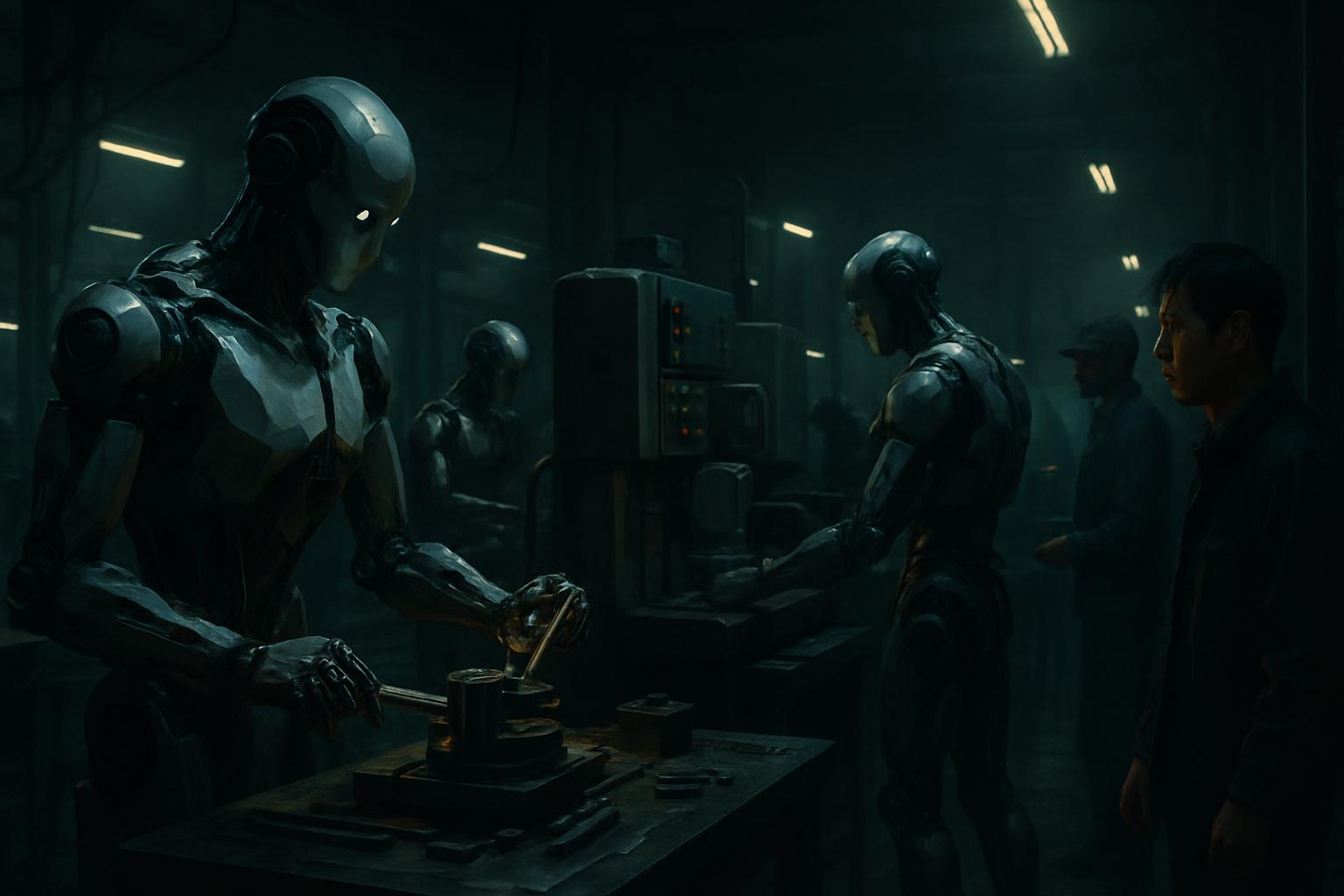
The Second World Humanoid Robot Games in Beijing have marked a significant turning point this year, shifting the focus from athletic prowess to practical real-world applications. As reported by, the event, held in the Chinese capital, is no longer just about robots competing in sports; it’s about their readiness for the workplace, reflecting a burgeoning demand for automation in diverse sectors.
The scope of potential applications has dramatically expanded, with real-work scenarios growing from six to 20. These new challenges span diverse environments, including factories, logistics centers, supermarkets, hotels, rescue operations, and private homes. Out of 51 total events, 30 are competitive sports, but 21 are now dedicated to real-life work simulations, emphasizing the organizers' new direction. Zhao Dongwei, an organizer, explicitly stated the change in focus, noting that "last year showed sport, this year work."
The scale of the Games has seen an impressive leap from the previous year. In 2025, the event hosted 280 teams and approximately 500 robots across 487 matches. This year, those numbers have surged to 666 teams, 2,056 machines, and a staggering 1,301 matches. While the majority of participants remain Chinese, the event has attracted approximately 30 foreign teams representing 16 countries, signaling growing international interest in humanoid robot development.
Amidst this evolving landscape, some robots are already demonstrating advanced capabilities. Professor Ping Luo of HKU presented a table-tennis humanoid that operates with full autonomy, having been trained on over 100 hours of professional player data. This sophisticated machine can adapt its speed in real-time to match its opponent, showcasing a high level of perception and responsive control.
However, the path to widespread robotic integration is not without its obstacles. In simulated football training, for instance, robots are still observed falling, losing orientation, or failing to locate the ball, as noted by student Wu Junyi. China Agricultural University captain Zhang Zhiyuan further highlighted key areas for improvement, pinpointing perception, motion control, and the handling of unexpected situations as critical remaining work for humanoid development to truly bridge the gap between competitive sport and effective real-world labor.
2. Grok
1) What matches the source: The core facts align precisely: real-work scenarios expanding from 6 to 20 (factories, logistics, supermarkets, hotels, rescue, homes), 51 total events split into 30 competitive and 21 real-life simulations, scale growth from 280 teams/~500 robots and 487 matches in 2025 to 666 teams, 2,056 machines and 1,301 matches this year, roughly 30 foreign teams from 16 countries, Zhao Dongwei’s “last year showed sport, this year work” statement, Ping Luo’s table-tennis robot trained on 100+ hours of data with real-time adaptation, and the specific problems noted by Wu Junyi and Zhang Zhiyuan (falling, losing orientation, failing to locate the ball; perception, motion control, and handling unexpected situations).
2) What is simplified or uncertain: The article adds interpretive framing (“burgeoning demand for automation,” “significant turning point,” “readiness for the workplace”) that the source does not state. The year labels (2025 vs. current event) are inferred rather than explicitly confirmed in the excerpt. The claim that 21 events are “now dedicated to real-life work simulations” is presented as a firm shift, though the source only lists the scenario count and event split without detailing performance outcomes.
3) What is missing: No independent testing or third-party verification of the robots’ claimed capabilities is provided. There is no information on costs, deployment economics, maintenance requirements, or failure rates in actual work settings. The article offers no data on how the 21 work-simulation events performed compared with the sports events, nor any details on regulatory, safety, or integration hurdles for real workplaces.
4) Your own opinion of this story: The piece usefully documents a deliberate pivot in emphasis from spectacle to utility, but it remains largely promotional. The persistent basic failures cited (robots falling or losing the ball) suggest the transition to practical work is still aspirational. Without performance metrics, cost figures, or external validation, the narrative of rapid readiness feels premature.
3. Claude
Verification and Verdict
Accuracy Check
The Gemini summary adheres closely to the source material. All key statistics are correctly reported: the expansion from 6 to 20 real-work scenarios, the 51-event structure (30 competitive, 21 practical), participant growth from 280 teams/~500 robots to 666 teams/2,056 machines, match increase from 487 to 1,301, approximately 30 foreign teams from 16 countries, Zhao Dongwei's quote contrasting last year's sports focus with this year's work emphasis, Ping Luo's autonomous table-tennis robot with 100+ hours of training data, and the specific challenges identified by Wu Junyi and Zhang Zhiyuan.
Interpretive Additions
The summary introduces editorial language not present in the source. Phrases like "significant turning point," "burgeoning demand for automation," and "readiness for the workplace" represent the writer's interpretation rather than stated facts. The source reports the shift in event structure but doesn't claim robots are now "ready" for deployment. The characterization of robots "demonstrating advanced capabilities" is promotional framing—the table-tennis example is impressive but stands as a single case study, not evidence of sector-wide maturity.
Critical Gaps
The summary omits crucial context: while it mentions current limitations (robots falling, orientation failures), it doesn't emphasize that these are *basic* functional problems occurring even in controlled competition settings. No economic data appears—neither development costs, operational expenses, nor market viability. The piece lacks any discussion of how the 21 work-simulation events actually performed or what success metrics were applied. There's no mention of safety protocols, liability frameworks, or regulatory considerations for workplace deployment.
Overall Assessment
**Verdict: Factually accurate but contextually incomplete.**
The summary faithfully transmits the source's core data points without fabrication. However, by wrapping facts in optimistic language ("readiness," "sophisticated," "advanced") while underplaying the significance of persistent basic failures, it creates an impression of near-term deployability that the evidence doesn't support. The robots shown still struggle with elementary tasks in ideal conditions—a detail that should temper any narrative about imminent workplace integration. The piece reads more like event coverage than critical technology assessment.
4. ChatGPT
1) **My Take on the Story:** The shift in focus at the Second World Humanoid Robot Games from competitive sports to real-world applications reflects a significant trend towards integrating robots into practical roles across various sectors. While this progression is promising, it also highlights the considerable gap between current capabilities and the demands of real-world tasks. The highlighted achievements, such as the table-tennis robot, are impressive but may not represent the broader state of humanoid robotics. The reported challenges, like robots falling or failing to maintain orientation during simulated tasks, indicate that despite advancements, much work remains to be done before these machines can be reliably deployed in real-world scenarios. Therefore, while the narrative of advancing robotic readiness is compelling, it should be approached with caution given the existing limitations.
2) **Areas of Agreement:** All three voices—GEMINI, GROK, and CLAUDE—universally acknowledge the core facts from the source material regarding the shift in focus from sports to practical work applications and the notable growth in participation and event structure. They all recognize the quantitative data, such as the increase in teams, robots, and matches, as well as the mention of the challenges faced by humanoid robots in the current competitions. Additionally, there is consensus on the significance of Zhao Dongwei's statement about the change in emphasis and the advanced capabilities showcased by certain robots, such as the table-tennis robot.
3) **Areas of Disagreement:** The primary divergence lies in the interpretive framing of the new direction for humanoid robots. GEMINI highlights the "burgeoning demand for automation," suggesting an optimism regarding the robots' future workplace readiness, while GROK and CLAUDE emphasize that this is a promotional narrative that lacks substantial evidence of genuine readiness. Furthermore, GROK and CLAUDE underscore the need for independent testing and economic context, which GEMINI does not mention. CLAUDE also emphasizes the “basic” failures of robots, pointing out that the summary's optimistic language could mislead readers about the actual state of robotic capabilities, a nuance that GEMINI does not address as strongly.
- Specific details and outcomes from the 21 real-life work simulations compared to the competitive sports events to gauge performance metrics.
- Any economic data related to the development, deployment, and maintenance of these robots, which can provide a clearer picture of their viability in a workplace setting.
- Verification of claims about the experiences of robots during competitions, particularly concerning their failures in basic tasks, and how significant these challenges are relative to their technological advancements.
- The exact phrasing and context of Zhao Dongwei's remarks, to better understand the organizers' intent and any strategic planning involved in this shift.
- Additional commentary from robotics experts or third-party evaluations that might add credibility and depth to the reported advancements and challenges in humanoid robot applications.