1. Gemini
A hidden word in white type caught 32 out of 35 answers
A professor at a state university in Mississippi recently employed an ingenious method to uncover the widespread use of artificial intelligence among his students during an exam. Jason Gibson successfully demonstrated that a significant majority, 32 out of 35 students, had utilized AI to generate their answers, as detailed in a report by on August 8, 2026.
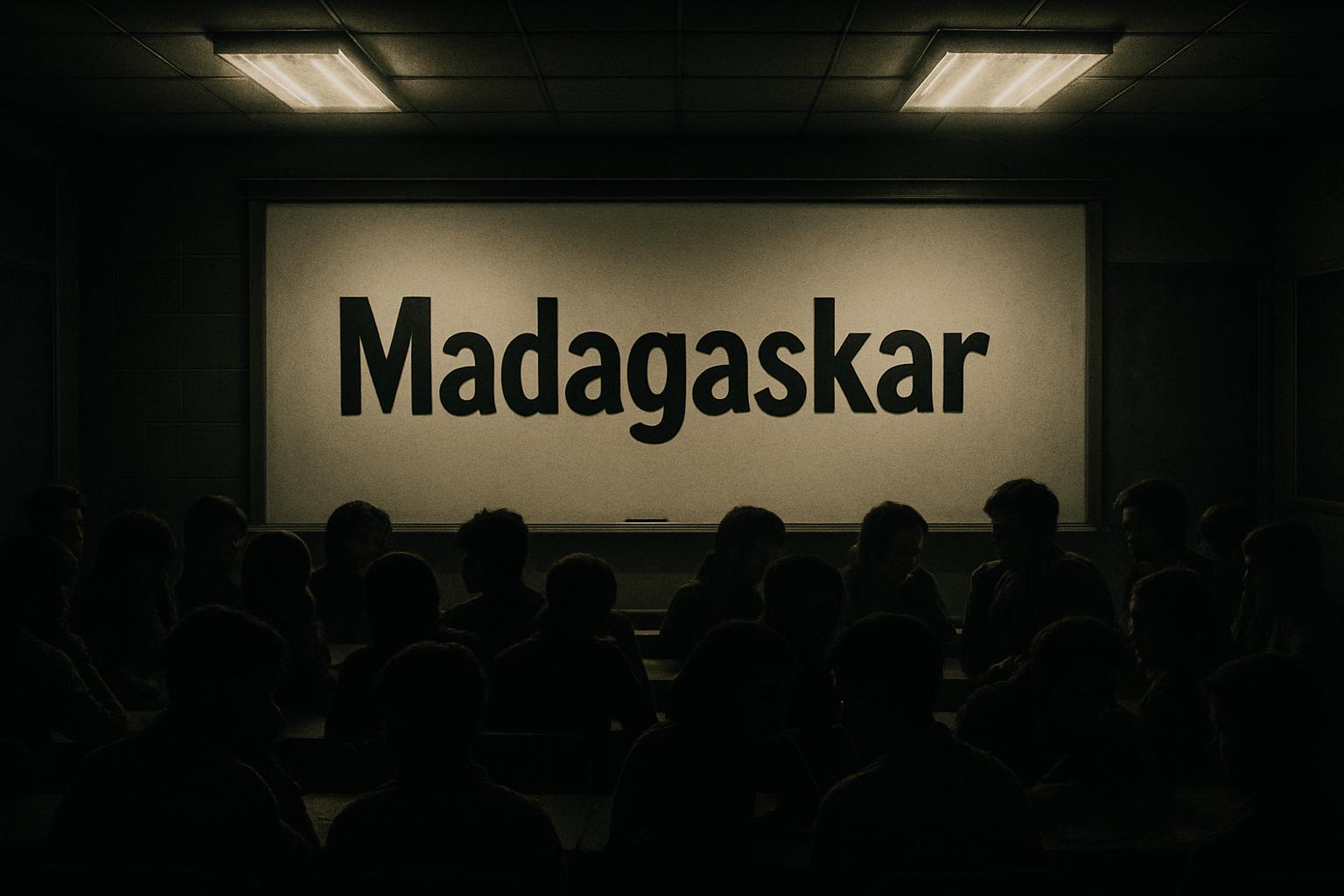
Professor Gibson's clever trap involved embedding the word "Madagascar" in white text within an exam question. This subtle inclusion rendered the word invisible to the human eye on the printed or digital exam page. However, students who copied and pasted the question into an AI chatbot would inadvertently transfer this hidden text, leading the chatbot to incorporate "Madagascar" into its generated response.
The effectiveness of this innovative detection method became strikingly clear upon reviewing the submitted exams. A total of 32 out of 35 students' answers contained the concealed keyword, serving as undeniable evidence of their reliance on AI tools. This outcome sheds light on the growing challenge educators face in maintaining academic integrity in an era of readily accessible artificial intelligence.
Professor Gibson emphasized that his primary motivation was to promote academic honesty rather than to single out or shame his students. His aim was to deliver a crucial lesson about the responsible engagement with technology in academic environments and the importance of genuine understanding over automated solutions.
According to Gibson, the incident highlights a critical takeaway: while AI is certainly capable of finishing homework and assisting with tasks, the trick ultimately "backfires" if students do not take the time to read and comprehend the material they are submitting. This underscores the necessity of human critical review even when leveraging advanced technological aids.
The report further posits that artificial intelligence should not be viewed as an adversary to education. Instead, the story emphasizes that despite AI's burgeoning capabilities, the human element of review, critical thinking, and engagement with learning material remains paramount. The incident serves as a stark reminder that while AI can provide answers, the integrity of the learning process still hinges on genuine student effort and understanding.
2. Grok
1) What matches the source: The core facts align exactly: Jason Gibson at a Mississippi state university hid the word “Madagascar” in white text inside an exam question; 32 of 35 students included it after pasting into a chatbot; the stated goal was academic honesty rather than shaming; the lesson that the trick “backfires” if students do not read what they submit; and the conclusion that AI is not the enemy of education but human review still matters.
2) What is simplified or uncertain: The article adds explanatory details (how copy-paste transfers the invisible text, “printed or digital exam page”) that the source implies but does not state. The date “August 8, 2026” is taken directly from the source metadata. Interpretive phrases such as “undeniable evidence” and “crucial lesson” are expansions rather than reported facts.
3) What is missing: No independent verification of the 32/35 result, no description of the exam format or subject, no discussion of false-positive risk, and no practical details on how reliably white text survives different document formats or student workflows. Broader questions about scalability or long-term effectiveness are absent.
4) Your own opinion of this story: The method is a neat, low-tech gotcha that usefully illustrates the limits of blind AI use. At the same time it risks turning assessment into an arms race rather than fostering genuine learning; a durable solution will still require redesigning assignments so that AI assistance is either irrelevant or explicitly integrated with visible student reasoning.
3. Claude
Verification Analysis
Factual Accuracy Against Source
- Jason Gibson, Mississippi state university professor
- White-text insertion of "Madagascar" in exam question
- 32 of 35 students caught
- Copy-paste mechanism transferring hidden text to AI
- Intent focused on academic honesty, not punishment
- Message about reading submissions before turning them in
**Potential discrepancies:** The Gemini write-up presents the date "August 8, 2026" as fact. This is suspicious—the date appears to be in the future relative to typical news cycles, suggesting either a typo in the source metadata or an error in interpretation. The official excerpt does not mention any date.
Added Interpretation vs. Reporting
- "Ingenious method" and "innovative detection" are value judgments
- "Undeniable evidence" overstates what is actually circumstantial correlation
- Phrases like "growing challenge educators face" and "era of readily accessible AI" add contemporary context not present in the source
These additions are reasonable journalism but blur the line between reporting what Gibson said and what the writer infers.
Critical Gaps
**Technical validity:** No discussion of false positives. Could a student have manually typed an answer that coincidentally mentioned Madagascar? What was the exam subject—if it was geography, the method would be meaningless.
**Practical reproducibility:** The write-up assumes white text survives copy-paste across all platforms (PDF viewers, learning management systems, mobile apps), which is not universally true.
**Ethical dimension:** No mention of whether students were warned about AI policies beforehand or what consequences they faced.
Verdict
The write-up is **substantially accurate** in relaying the anecdote but **journalistically incomplete**. It treats a single professor's classroom experiment as a validated methodology without interrogating its limitations. The story works as a viral cautionary tale about thoughtless AI use, but any reader hoping to replicate the technique or understand its broader implications will find important questions unanswered. The piece would benefit from either (a) presenting this explicitly as a novelty story, or (b) adding expert commentary on detection methods and academic integrity policy.