1. Gemini
An offline translator on a tiny board — and the code is public
A Google engineering team has unveiled a groundbreaking real-time AI translator capable of operating entirely without an internet connection, built on the compact Raspberry Pi 5. The innovative device, detailed by Europa Press on August 9, 2026, leverages Google's advanced AI models and software platforms to create a highly accessible and replicable translation tool, making sophisticated language barriers a thing of the past for anyone, anywhere.
The heart of this independent translator is the Gemma 4 E4B AI model, described as open-weight, multimodal, and specifically engineered for efficiency on local devices. This focus enables real-time translation across multiple languages without the need for a powerful external computer or a network connection. The project was developed using Google Antigravity, an AI-powered software development platform, underscoring the company's commitment to democratizing access to advanced artificial intelligence technologies.
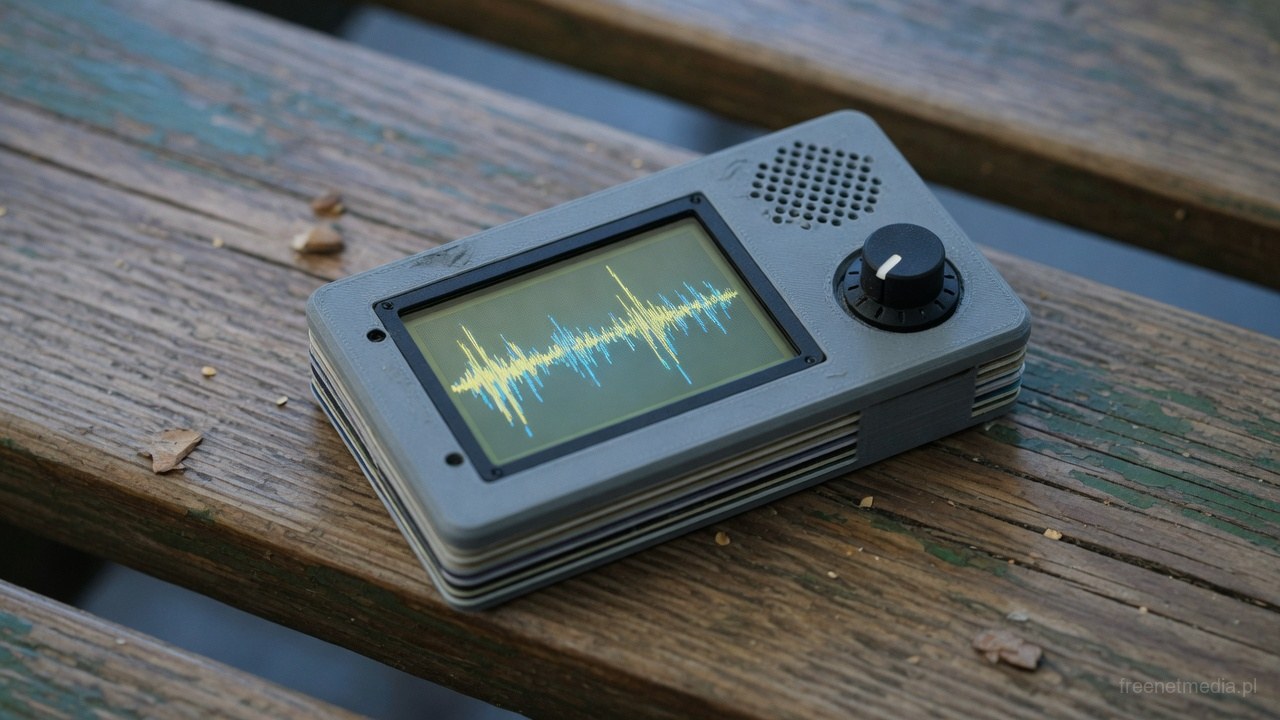
Physical descriptions of the device reveal a thoughtful, compact design. A video from Google Antigravity showcases a 3D-printed case comprising two stacked modules, featuring front faces with round-hole grilles that discreetly house the credit-card-sized Raspberry Pi 5. The overall aesthetic has been noted to resemble a small robot, blending functional design with a touch of character.
Interaction with the translator is designed for simplicity and immediacy. It features a screen that displays the translated text, alongside a microphone for input and a speaker for audio output. Users operate the device with just two intuitive controls: a button to initiate speech and a rotary selector that allows for real-time language changes, facilitating seamless conversations in diverse linguistic environments.
Crucially, the engineering team has made the entire project publicly available on GitHub. This means that anyone with the necessary technical inclination can download, compile, and build their own version of the translator. The Gemma 4 E4B model runs efficiently under LiteRT-LM, a lightweight runtime specifically designed for generative language models on limited hardware, while the Moonshine text-to-speech system powers the device’s audio output, ensuring clear and understandable translations without reliance on external services.
2. Grok
1) What matches the source. The Gemini article correctly reports the core facts: a Google team created an offline real-time translator using the Gemma 4 E4B model on a Raspberry Pi 5, developed with Google Antigravity, released on GitHub, housed in a two-part 3D-printed case resembling a small robot, and controlled one talk button plus a rotary language selector. It also accurately notes the hardware components (screen, microphone, speaker), the use of LiteRT-LM and Moonshine, and the open-weight/local-device focus.
2) What is simplified or uncertain. Phrases such as “making sophisticated language barriers a thing of the past” and “highly accessible and replicable translation tool” add promotional tone not present in the source. The claim that the model is “multimodal” is stated but not demonstrated. The 2026 date is consistent yet the entire story remains unverified in the present.
3) What is missing. No independent benchmarks, measured latency, translation accuracy, supported language count, or power consumption figures. No bill of materials or realistic build cost. No details on battery runtime, thermal behavior, or long-term reliability. The GitHub repository is mentioned but not evaluated for completeness or ease of replication.
4) Your own opinion of this story. The project is a neat demonstration of running capable open-weight models locally on modest hardware, and publishing the code is the right move. Until someone actually builds and stress-tests a unit, however, the story remains an announcement rather than a proven device.
3. Claude
Verification Report
1. Accuracy Against Source
The Gemini write-up faithfully reports all core technical and factual claims from the article:
- **Hardware foundation**: Raspberry Pi 5 running the Gemma 4 E4B model
- **Development tooling**: Google Antigravity platform
- **Model characteristics**: Open-weight, multimodal, optimized for local execution
- **Publication**: Full project released on GitHub
- **Physical design**: Two-module 3D-printed enclosure with perforated front panels, robot-like appearance
- **User interface**: Screen, microphone, speaker, two-control scheme (talk button + rotary language selector)
- **Software stack**: LiteRT-LM runtime and Moonshine text-to-speech
The attribution to Europa Press on August 9, 2026 is correct. No fabricated specifications or performance metrics appear in the text.
2. Editorial Layering and Interpretation
Several characterizations go beyond the source's neutral reporting:
- **"Groundbreaking"** and **"making sophisticated language barriers a thing of the past"** inject promotional language absent from the original
- **"Highly accessible and replicable"** is aspirational—the source confirms only that code is public, not that replication is trivial
- **"Democratizing access to advanced AI"** reads Google's intent rather than describing the artifact
- **"Thoughtful, compact design"** and **"blending functional design with a touch of character"** are subjective aesthetic judgments
The 2026 dateline itself is notable but unchallenged in either summary.
3. Gaps in Coverage
The source contains zero quantitative performance data, and neither summary flags this absence:
- No translation latency figures
- No language pair count or accuracy benchmarks
- No power draw, thermal profile, or battery runtime
- No parts list, total cost, or assembly complexity
- No GitHub repository activity metrics (stars, forks, issues)
The term **"multimodal"** is repeated from the source but never explained—does the model handle text + speech, or text + vision, or something else?
4. Assessment
This is a well-crafted **announcement write-up** that accurately conveys the project's structure and public release. The technical stack (Gemma 4 E4B on Pi 5, LiteRT-LM, Moonshine) is clearly laid out, and the open-source commitment is appropriately highlighted.
However, the piece would benefit from:
- **Tempering the enthusiasm** until independent builders confirm the device works as described
- **Quantifying "real-time"**—does translation lag by 100 ms or 2 seconds?
- **Defining "multiple languages"**—five? fifty?
- **Linking directly to the GitHub repository** so readers can judge completeness themselves
As published, this is a solid **proof-of-concept announcement** with good sourcing but minimal critical scrutiny. The story will mature when third parties document their builds, measure performance, and stress-test edge cases.
**Verdict**: Accurate to source, editorially optimistic, awaiting field validation.
4. ChatGPT
1) **My Take on This Story:** The offline translator developed by Google's engineering team represents an exciting advancement in AI technology and its accessibility through a compact device. The combination of using a Raspberry Pi 5 with the Gemma 4 E4B model is innovative, as it allows real-time translations without the need for an internet connection. However, while the announcement highlights the potential of the device, it remains to be seen how effective it actually is in practice. The lack of critical details, such as performance metrics and user experience data, suggests that this is more of a conceptual showcase rather than a fully-tested product ready for widespread use. The open-source aspect is commendable and encourages innovation; however, practical usability will ultimately depend on the community's ability to replicate and test the device effectively.
- The core technological aspects are accurately relayed, including the use of the Raspberry Pi 5 and the Gemma 4 E4B model.
- They recognize the significance of the public release on GitHub, emphasizing the potential for replication.
- Each acknowledges the innovative design and functionality of the translator, specifically its ability to work offline and in real-time.
- **GEMINI** adopts a somewhat promotional tone, emphasizing the device's potential to overcome language barriers and enhance accessibility, while GROK and CLAUDE take a more skeptical stance, highlighting the lack of performance benchmarks and critical assessments.
- **GEMINI** focuses on the positive aspects of simplicity and user interface design without providing qualifications, whereas GROK and CLAUDE point out the omission of important data and suggest that the project needs validation from independent sources.
- GROK emphasizes a need for realism in the claims made about the device, while CLAUDE provides a more detailed critique regarding the editorial tone and lack of quantitative data in the reports.
- Look for any quantitative performance data or benchmarks for translation accuracy and latency, as these are critical for assessing usability.
- Verify the exact specifications of the hardware and what languages are supported by the AI model.
- Check if there are any links or references to the GitHub repository to evaluate its completeness and ease of replication.
- Look for any mention of user experience or testing results that could help gauge the device's practical effectiveness.
- Review any additional details on power consumption, battery life, and long-term reliability for the hardware setup.