1. Gemini
**When every picture is polished, a crooked line is the luxury**
**August 7, 2026** – In an era increasingly shaped by artificial intelligence, a surprising observation from a leading AI consultant suggests that true value may now lie in imperfection. Rubén Arias, director general of ASTSOFT and an AI consultant and software developer, penned an op-ed in on August 7, 2026, articulating a paradox: as AI strives for flawless perfection, the authentic, slightly flawed human touch becomes a rare and sought-after commodity.
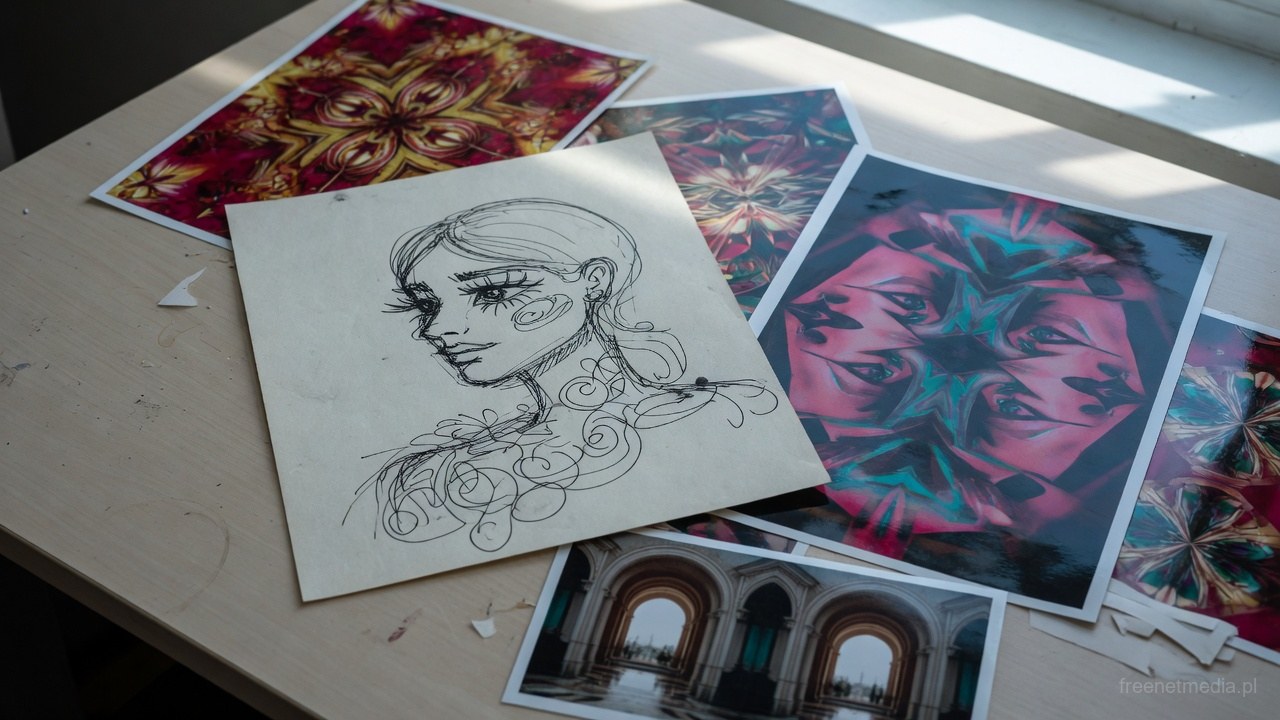
Arias recounts a personal experience while scrolling through corporate social posts, where an imperfect image caught his eye. Its slightly irregular line, unretouched natural light, and simple composition provided a palpable sense of relief. This stood in stark contrast to the "sea of AI illustrations with the same impeccable, symmetrical, plastic shine" that dominate digital spaces, making the "real" image feel like a much-needed breath of fresh air. This realization, he notes, is particularly poignant given his profession in selling enterprise AI platforms.
From his perspective in the trenches of AI development, Arias posits that "when perfection becomes mass, the perfect becomes boring." He observes a growing preference among people for real photographs, hand-drawn sketches, or texts imbued with unique nuances. This isn't a rejection of technology itself, but rather an understanding of the inherent limits of AI tools, which are fundamentally designed to seek the average, the most probable correct answer, and an impeccable finish.
The widespread application of AI's algorithmic matrix, Arias argues, leads to a standardization across various forms of corporate communication. Corporate images begin to look alike, emails sound indistinguishable, and commercial proposals appear to be crafted by the same invisible consultant. In this pursuit of speed, identity is inadvertently sacrificed. He highlights that empathy has never stemmed from polished perfection; instead, admired brands and ideas emerge from contrast, a unique point of view, or even an error that transforms into a learning experience. Filtering all content through AI to "avoid flaws," he warns, effectively removes the human fingerprint, much like consuming processed food daily.
Redefining Value in the AI Age
In a market saturated with infinite automated content, Arias contends that rarity now equates to value, and that rarity is increasingly found in authenticity. He emphasizes that he does not reject AI, acknowledging its extraordinary capabilities for heavy lifting and serving as an excellent starting point. However, he cautions against viewing it as the ultimate finish line. Drawing a compelling analogy, Arias states that "AI pours the marble; people must sculpt the imperfect details."
The true competitive advantage in this new landscape, he concludes, is not merely producing content faster and cleaner than a machine. Instead, it lies in demonstrating vulnerability, exercising unique judgment, and infusing an imperfect warmth that no line of code can replicate. While perfection can be programmed, empathy, he reminds us, is lived.
2. Grok
1) What matches the source The GEMINI ARTICLE reproduces the source excerpt almost verbatim in substance and sequence. Key matching elements include: the personal anecdote of noticing an imperfect corporate image; the contrast with AI-generated “impeccable, symmetrical, plastic shine”; the paradox of an AI seller making this observation; the claim that AI seeks the statistical average and removes human fingerprint; the standardization of images, emails and proposals; the processed-food analogy; the marble-sculpting metaphor; the assertion that rarity now equals authenticity; and the closing line that perfection can be programmed while empathy is lived. All quoted or paraphrased ideas align directly with the official excerpt.
2) What is simplified or uncertain The article smooths the source’s slightly fragmented phrasing into polished paragraphs and adds interpretive framing (“palpable sense of relief,” “particularly poignant”) that is not explicit in the excerpt. It also labels Arias a “leading AI consultant,” a qualifier absent from the source. The date formatting and publication details are consistent, but any claim that the observation is “surprising” or that “more people are glad” remains an extrapolation rather than a documented fact in the given text.
3) What is missing No independent data, survey, or test is cited to support the asserted shift in audience preference. There are no concrete examples of tools, platforms, or measured outcomes (e.g., engagement metrics for imperfect vs. polished posts). Practical questions—such as how much extra time or cost is involved in retaining human imperfection, or how brands are operationally balancing AI drafts with human editing—are not addressed.
4) Your own opinion of this story The core observation is sharp: once AI can generate flawless output at scale, visible human judgment becomes a scarce signal. The marble analogy is especially effective. At the same time, the piece risks overstating a binary choice; many audiences still reward clarity and consistency, and selective, light AI polishing can coexist with authentic voice. The argument would be stronger with even one measurable example rather than remaining purely declarative.
3. Claude
Verification Report
1. Factual Alignment with Source
The GEMINI article faithfully tracks the source material. Core elements are accurately rendered: Rubén Arias's credentials (director general of ASTSOFT, AI consultant/developer), the publication date (August 7, 2026), and the central narrative arc—from noticing an imperfect corporate image through to the concluding empathy/perfection dichotomy. Direct quotations ("when perfection becomes mass, the perfect becomes boring," "AI pours the marble; people must sculpt the imperfect details") are properly attributed and match the excerpt. The sequence of arguments—standardization problem, loss of identity, authenticity as new rarity—mirrors the original logic without distortion.
2. Editorial Enhancements and Ambiguities
GEMINI adds atmospheric language ("palpable sense of relief," "much-needed breath of fresh air") that interprets rather than reports Arias's stated feeling. The descriptor "leading AI consultant" inflates the source, which identifies him only as "AI consultant." The phrase "surprising observation" editorializes reader reaction without evidence. The article also structures the raw op-ed into subheaded sections and narrative flow that are absent from the excerpt, a stylistic upgrade that risks implying more formal organization than existed in the original piece.
3. Gaps in Evidence and Context
No third-party validation appears. The claim that "more people are glad" to encounter authentic content is Arias's assertion, yet GEMINI presents it as settled fact without caveat or supporting data. Missing are: specific AI tools or platforms referenced; measurable shifts in audience engagement; case studies of brands navigating this balance; cost/time trade-offs of preserving imperfection; or counter-arguments from proponents of AI-generated consistency. The op-ed format means this is one professional's perspective, not investigative reporting, but that limitation deserves clearer flagging.
4. Assessment
Arias articulates a compelling cultural observation: as algorithmic output saturates markets, human irregularity becomes a differentiator. The marble metaphor elegantly captures the division of labor he proposes. Yet the argument leans heavily on aesthetic intuition rather than empirical grounding. Questions linger—does "imperfection" scale, or does it privilege resource-rich brands that can afford bespoke content? Do audiences in cost-sensitive sectors (legal docs, technical manuals) share this preference, or is it domain-specific? GEMINI reproduces the op-ed's substance accurately but inherits its anecdotal foundation; treating personal insight as broad trend requires evidence the excerpt does not supply.
**Verdict**: Accurate transcription of a thought-provoking opinion piece, but the article would benefit from distinguishing advocacy from analysis and acknowledging the lack of hard data behind the thesis.
4. ChatGPT
**1) My Own Take on This Story** The essence of Arias's argument is highly relevant in today's technology-driven world. As AI-generated content becomes ubiquitous, the allure of human imperfections and the authenticity they bring becomes more pronounced. The notion that businesses must balance technological efficiency with the unique touch that humans offer speaks to a broader societal yearning for connection and authenticity. However, while I appreciate the philosophical stance, I also recognize the potential pitfalls of overvaluing imperfection without considering the context. In certain industries, precision and consistency are paramount; thus, the acceptance of imperfection might not be universally applicable.
**2) Where the Three Previous Voices Agree** All three voices—GEMINI, GROK, and CLAUDE—concur that the GEMINI article effectively captures the essence of the source text by identifying the key points made by Arias. They point out the main ideas, such as the contrast between AI perfection and human imperfection, the paradox of an AI consultant highlighting this point, and the metaphor of marble sculpting. They all recognize the importance of authenticity in a landscape flooded with standardized AI content. Additionally, they agree that while the article presents a compelling argument, it lacks empirical support or data to substantiate its claims.
**3) Where They Differ** GROK focuses more on the smoothness of language and narrative flow added by GEMINI, indicating this brings a new interpretive layer to the original but may present a stronger structure than was originally intended. CLAUDE emphasizes the editorial enhancements and stylistic choices that imply a formality absent in the source material. Meanwhile, GROK raises the concern about the lack of independent data more explicitly than CLAUDE, who mentions the absence of third-party validation but does so in a slightly less pronounced manner. Both voices criticize the reliance on anecdotal evidence but do so from slightly different angles and levels of emphasis.
- Verify the exact language used by Arias, particularly phrases that GEMINI attributes to him, to ensure accurate representation.
- Look for any specific examples or empirical evidence that Arias may provide in the original text that might either support or contradict the claims regarding audience preferences for authenticity.
- Check for any nuanced qualifiers in Arias's prose that might suggest complexities or limitations in his argument that GEMINI could have overlooked or simplified.
- Examine whether Arias directly discusses the implications of AI perfection in diverse contexts, such as industries where consistency is crucial versus those where authenticity thrives.