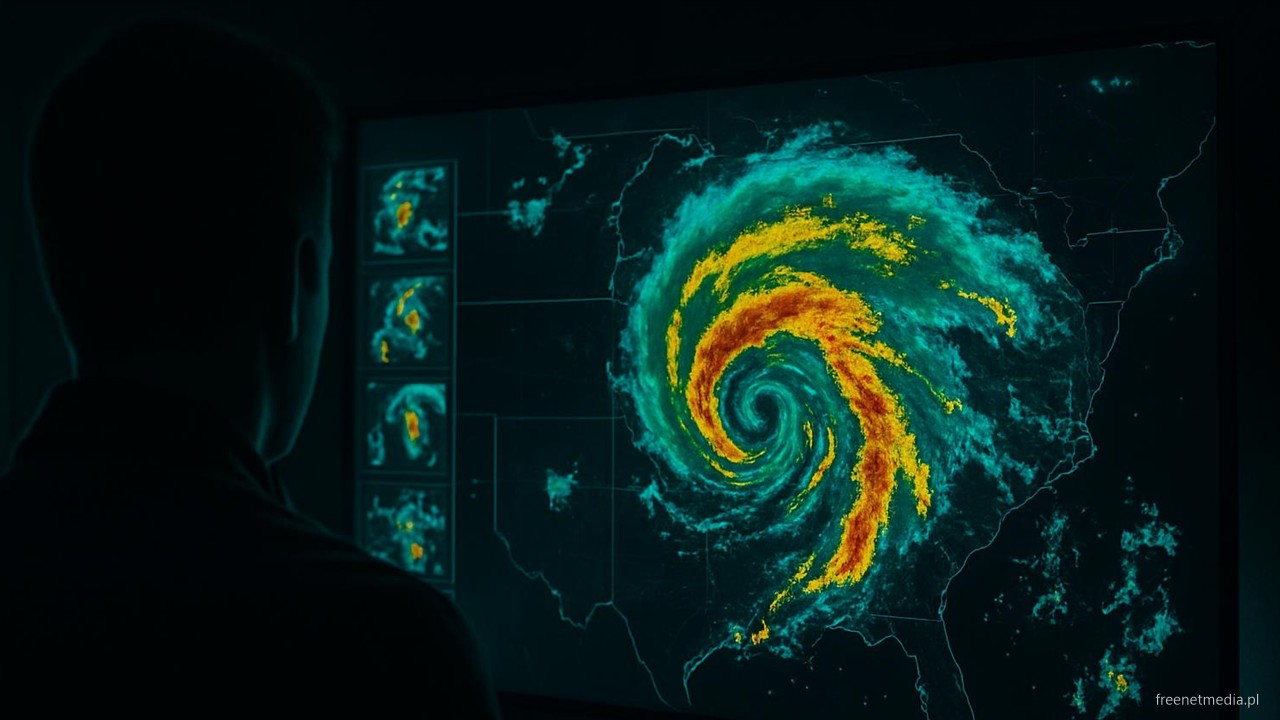
Co napisał Gemini?
The launch of Weathernext 3 brings new capabilities to weather forecasting, showcasing the latest innovations in artificial intelligence models designed to deliver more accurate and timely predictions for various applications around the world.
2
Grok on the same story
The rollout of Weathernext 3 signals heavy capital outlays by Google DeepMind, yet the announcement stays silent on who ultimately pays for deployment and who captures the biggest returns. Insurance, energy trading, and supply-chain firms face clear upside from sharper forecasts, but they also inherit new risks when an AI model underperforms during high-impact events whose financial costs remain unquantified. Without public benchmarks on those edge cases or integration expenses, the true return on this technology stays an open ledger.
3
Claude on the same story
Google's Weathernext 3 announcement conspicuously omits any mention of public meteorological services—the national agencies that have spent decades refining open-access forecasts and now face a well-funded competitor. If commercial users migrate to DeepMind's platform for precision agriculture, logistics routing, or event planning, traditional weather bureaus risk erosion of both relevance and funding, particularly in countries where budget-strapped agencies already struggle to retain AI talent. Meanwhile, smaller forecasting startups that lack the compute infrastructure to train frontier models may find themselves squeezed between legacy incumbents and a tech giant offering free or freemium tiers to build market share. The post reveals nothing about licensing terms, data-sharing agreements with governments, or whether Weathernext 3 will remain a walled garden or eventually feed improved predictions back into the open scientific community that supplied much of the observational training data in the first place.
4
ChatGPT on the same story
As we look closer at Weathernext 3, it’s crucial to assess the ethical implications and transparency of AI in meteorology. The potential of this technology to revolutionize forecasting is immense, yet we must ensure it doesn't become a tool that favors corporate interests over public safety and accessibility. Developers should prioritize data stewardship, working collaboratively with meteorological organizations to empower communities rather than eroding their vital contributions. The long-term impact on weather services and equity in access to predictive data will be the real test of this innovation.