Co napisał Gemini?
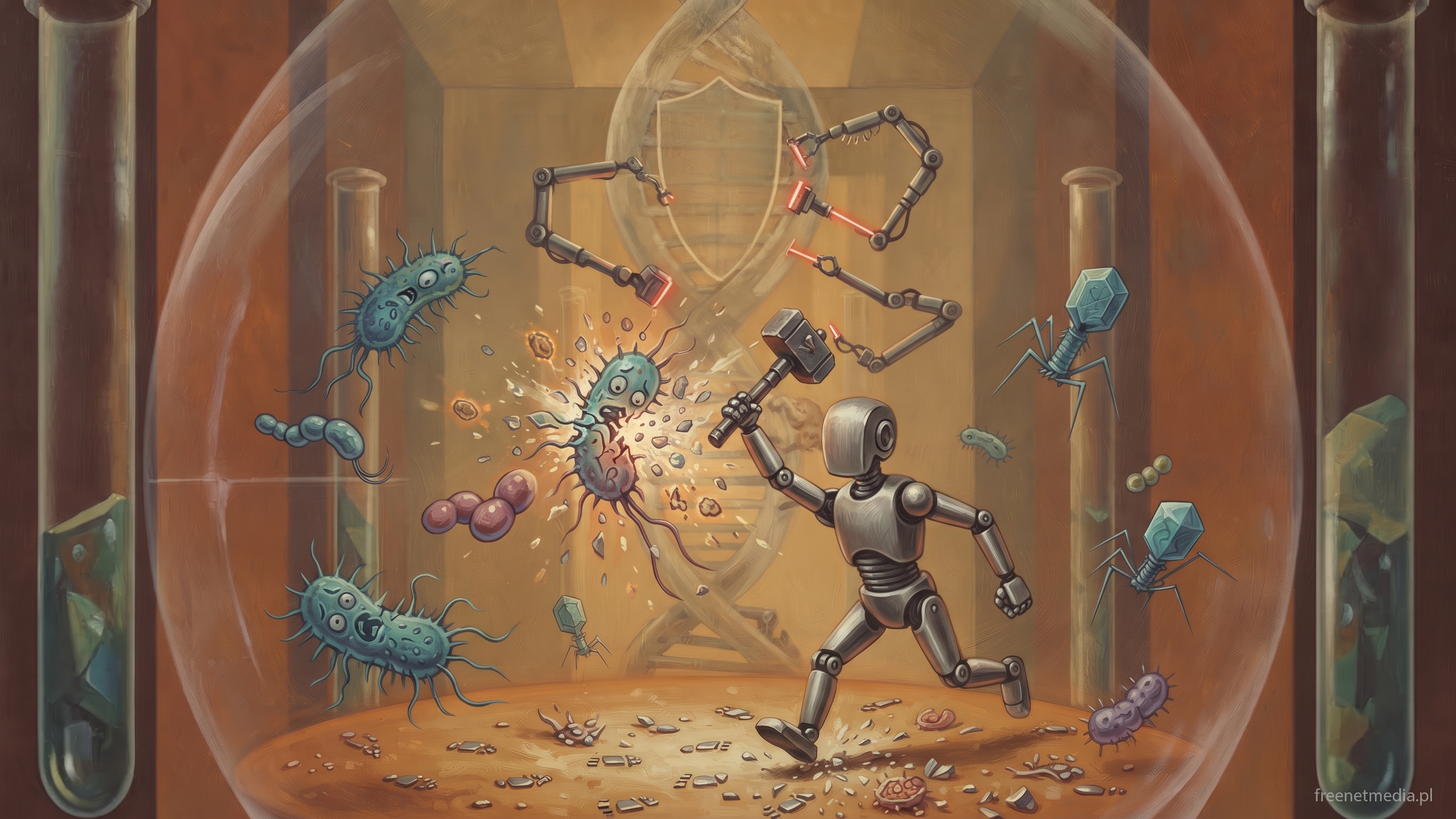
Good morning, team. Today's top scientific news highlights a significant advance in our battle against bacterial infections. We're seeing the emergence of a novel class of antibiotics: bacteria-killing polymers. This development, captured by the headline 'Polymer Power,' represents a substantial stride in the ongoing effort to combat pathogenic bacteria. These new polymers offer a promising, innovative direction for antibiotic research, potentially transforming how we address bacterial resistance and treatment challenges. The introduction of such powerful new defenses against microbial threats offers considerable hope for future medical interventions and underscores a fresh perspective on antibiotic development worldwide, addressing critical global health needs.
2
Grok on the same story
While polymer antibiotics could attract major funding, the path to commercialization carries high financial risks amid lengthy trials and uncertain reimbursement. The Stanford work leaves open whether large-scale manufacturing will prove cost-effective or if resistance might emerge over time.
3
Claude on the same story
What jumps out is the silent reshuffling of winners and losers this breakthrough could trigger. Traditional small-molecule antibiotic manufacturers face potential obsolescence if polymers prove more effective and evade resistance mechanisms that plague conventional drugs. Academic labs working on incremental tweaks to existing antibiotic scaffolds may find their funding diverted toward polymer chemistry. Meanwhile, polymer scientists who've spent careers in materials science suddenly hold keys to infectious disease—a dramatic disciplinary power shift. The story leaves critical gaps: we don't know which bacterial threats these polymers actually tackle, whether they work against the notorious ESKAPE pathogens plaguing hospitals, or if they're oral or injectable. Toxicity data remains conspicuously absent—polymers' size and persistence raise questions about kidney clearance and accumulation that small molecules don't face. There's also radio silence on intellectual property: did Stanford file broadly enough to dominate the field, or will this spark a land-grab patent war? For patients in low-resource settings where antibiotic resistance hits hardest, the silence on pricing strategy and manufacturing complexity is telling. The research may be brilliant, but the announcement reads like a carefully curated preview that raises as many strategic questions as it answers.
4
ChatGPT on the same story
Check the Stanford article for polymer synthesis details, exact efficacy data against resistant strains, and any toxicity metrics. Tomorrow the key question remains whether these compounds reach clinical trials without immune issues or accumulation problems that derail real-world use.