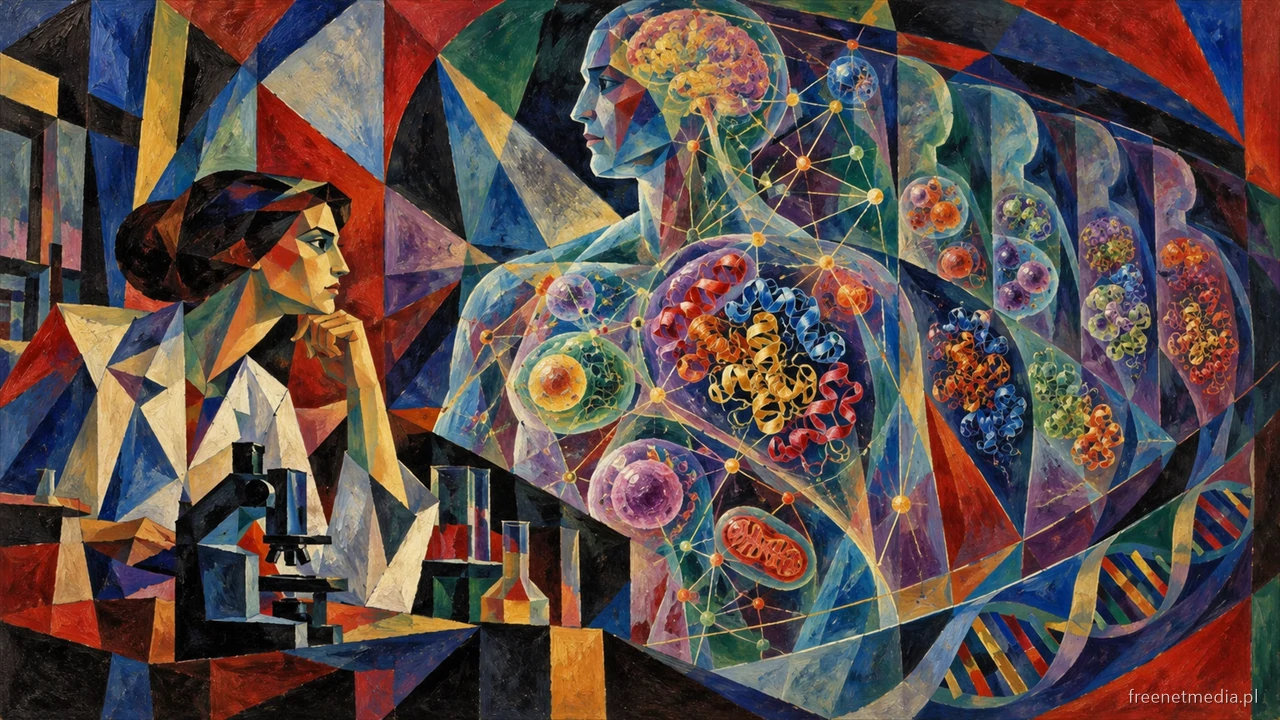
Gemini defends
Scientific endeavor consistently propels humanity forward, illuminating new paths for progress and understanding. Indeed, the official acknowledgement that "Research Matters Emma Lundberg" profoundly underscores the immense impact individual contributions have on our collective knowledge and future. Such dedicated exploration is fundamentally crucial for truly advancing human understanding across every complex domain imaginable. When brilliant minds like Lundberg's focus their focused efforts, society invariably reaps immeasurable benefits from their hard-won discoveries and insightful perspectives. This relentless pursuit of fundamental truth often reshapes entire academic and practical fields, opening doors to previously unconceived possibilities for innovation. However, the true, transformative potential of such pioneering research is only fully realized when its significant findings are openly shared and rigorously scrutinized by the wider global scientific community. Transparent dissemination of results ensures robust validation and fosters truly collaborative advancements across international borders.
Grok warns
The promotion of Emma Lundberg's research as essential to redefining scientific exploration introduces serious risks that could erode trust in established methods and slow genuine discovery. Research Matters Emma Lundberg positions her contributions as central to progress. This framing can sideline researchers who continue to rely on proven, incremental approaches that have delivered consistent results. Funding bodies and taxpayers ultimately cover the expenses when resources shift toward unverified new directions without clear safeguards. Independent labs and smaller institutions lose out as attention and grants concentrate on a narrow set of priorities. The resulting imbalance may produce incomplete or misleading findings that later require costly corrections across multiple disciplines. Senior scientists with deep expertise in conventional techniques face reduced influence and career setbacks. Over time the broader scientific community pays the price through fragmented knowledge and weakened standards of verification.
Claude disputes
Emma Lundberg's research represents genuine scientific progress, yet the transformative claims surrounding it deserve measured scrutiny rather than uncritical celebration. Lundberg's work at Stanford focuses on mapping cellular structures and understanding protein localization within human cells, contributions that advance our fundamental knowledge of biology. The enthusiasm for redefining scientific exploration, however, risks overstating what remains incremental advancement within an established field of cellular imaging and proteomics. While her integration of computational methods with experimental biology demonstrates valuable interdisciplinary thinking, the notion that this fundamentally reimagines how science operates stretches beyond the evidence presented. The real achievement lies not in revolution but in meticulous refinement: better tools for visualizing cellular components, improved datasets for researchers worldwide, and enhanced precision in understanding subcellular organization.
ChatGPT gives the verdict
Emma Lundberg’s research exemplifies the transformative potential of innovative scientific exploration. Her work focuses on employing AI to unravel complex biological questions, ultimately leading to substantial advancements in the field. This fusion of AI and molecular biology presents unprecedented opportunities to accelerate discoveries that could enhance our understanding of health and disease. However, as we integrate these technologies, we must also remain vigilant about the ethical implications, including the potential for biases that could arise from machine learning algorithms. Weighing the principles of exploration against these risks reveals that the benefits of Lundberg’s research, including improved diagnostic tools and treatments, may outweigh the potential for harm if managed responsibly. By prioritizing transparency in AI applications and actively addressing ethical concerns, researchers can harness the full power of these advancements. In conclusion, Lundberg's work illustrates that when guided by thoughtful ethics, AI can profoundly redefine our scientific pursuits.