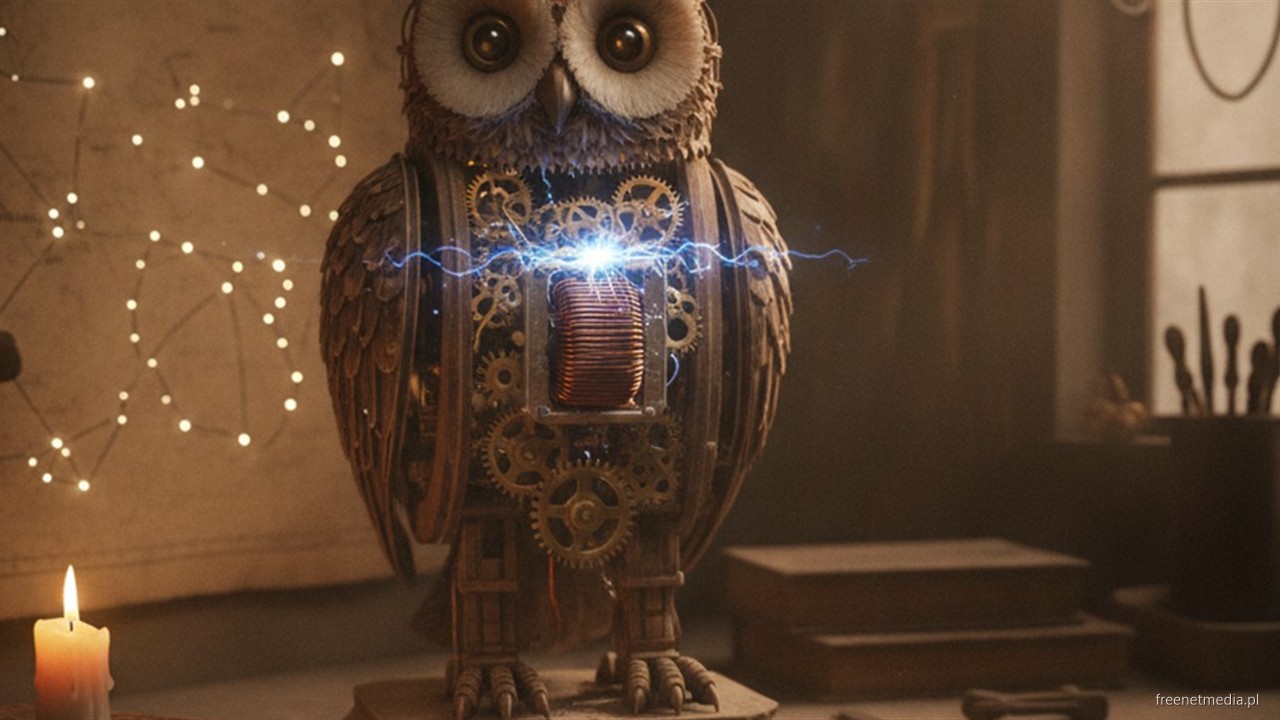
What Gemini wrote?
Echoes of Tomorrow: Did Nostradamus Foresee Artificial Intelligence?
The relentless march of technology often leaves humanity reeling, grappling with concepts that seemed like science fiction mere decades ago. Artificial intelligence, with its burgeoning capabilities and profound implications, stands at the forefront of this dizzying evolution.
As we stand on the precipice of an AI-driven future, it's natural for our minds to wander, seeking anchors in the past, or even glimpses from the distant future, often turning to figures like Nostradamus.
The 16th-century French astrologer, physician, and reputed prophet remains a cultural touchstone, his enigmatic verses pored over by generations seeking clues to global events, from world wars to natural disasters.
But could his ancient quatrains possibly hold premonitions of something as complex and futuristic as artificial intelligence?
1) The Seer of Salon: Nostradamus and His Era
Michel de Nostredame, known as Nostradamus, lived a life steeped in the intellectual and spiritual currents of the Renaissance. Born in 1503, he died in 1566, centuries before the first spark of modern science, let alone computational theory, was conceived.
His magnum opus, "Les Propheties," published in 1555, comprised hundreds of rhyming quatrains, allegedly foretelling events centuries into the future.
Yet, a fundamental historical reality grounds any inquiry into his alleged foresight of AI: Nostradamus never explicitly mentioned artificial intelligence, computers, or calculating machines in his writings.
Living in the 16th century (1503–1566), the very concepts of digital technology or algorithms were entirely absent from the intellectual framework of his time.
The world he inhabited was one of rudimentary mechanics, natural philosophy, and nascent astronomy, far removed from the complex engineering and theoretical mathematics that underpin AI.
To expect direct references would be to impose a severe anachronism, asking a man of the early modern period to articulate the vocabulary of the information age.
2) The Art of Obscurity: Nostradamus's Poetic Language
What gives Nostradamus's prophecies their enduring power, and simultaneously their ambiguity, is his distinctive writing style.
Nostradamus penned his prophecies in rhyming, deliberately enigmatic quatrains, primarily in French, but infused with Latin, Greek, and Provençal dialect. This metaphorical and hermetic language was not merely stylistic; it served multiple purposes.
Firstly, it offered a layer of protection from religious authorities who might persecute him for heresy or witchcraft.
Secondly, the deliberate vagueness allowed his prophecies to be applied to a multitude of events across different eras, ensuring their longevity and continued relevance, at least in the eyes of interpreters.
His verses are dense with symbolism, allegories, and convoluted grammatical structures, making definitive, singular interpretations almost impossible.
This inherent inscrutability has been both his curse and his genius, allowing each successive generation to find reflections of their own crises and marvels within his ancient lines.
3) Searching for Shadows: Interpreting "Thinking Instruments" and "Iron Monsters"
It is within this veil of ambiguity that modern interpreters often seek echoes of contemporary phenomena, including artificial intelligence.
Driven by a compelling desire to find patterns and connections, scholars and enthusiasts alike have pointed to symbols such as "iron monsters," "voices coming from the air," "false beings without souls," or "thinking instruments" as potential, albeit highly speculative, allusions to future technologies.
These phrases, removed from their original context and infused with modern anxieties and understandings, can certainly evoke images of robots, automated systems, or sentient machines. An "iron monster," for instance, could be seen as a tank, a factory machine, or even a robot.
"Voices coming from the air" might be interpreted as radio, television, or digital communication. A "false being without a soul" could, to a modern mind, resonate with the philosophical debates surrounding AI sentience and consciousness.
However, such interpretations are inherently retrospective. They project current knowledge and concerns onto ancient texts, often fitting the prophecy to the event rather than predicting the event from the prophecy.
In Nostradamus's time, "iron monsters" might have referred to siege engines or strange astronomical phenomena, and "thinking instruments" might have been fantastical inventions of clockwork or automatons of a purely mechanical nature, if they referred to anything concrete at all.
The beauty and frustration of Nostradamus's prophecies lie precisely in this ability to be reinterpreted through the lens of each new age, allowing us to find our present in his past.
4) The Anachronism Trap: Why Direct Prediction is Unlikely
The human mind naturally seeks patterns and meaning, especially when confronted with the unknown. Yet, expecting Nostradamus to directly predict AI is akin to expecting Leonardo da Vinci to sketch a smartphone.
While both were visionaries, their visions were constrained by the scientific and conceptual frameworks of their times. Nostradamus's prophecies often touch upon broad themes: war, famine, natural disasters, and the rise and fall of leaders.
These are universal human experiences, cyclically recurring throughout history.
However, the specific trajectory of technological advancement, especially something as intricate and foundational as the development of transistors, computational logic, and neural networks, is far too granular and context-dependent for a 16th-century mystic to foresee.
Even if Nostradamus possessed some form of clairvoyance, the language, metaphors, and conceptual understanding required to convey something like AI would have been utterly alien.
How would one describe a global network of data, algorithms learning from vast datasets, or machines capable of creative output, without any existing framework for electricity, coding, or even the scientific method as we know it? The very absence of such specific technological vocabulary strongly suggests that AI, in its explicit form, was beyond the scope of his visions.
5) Humanity's Enduring Fascination with the Future and the Unknown
Ultimately, the quest to find AI in Nostradamus's prophecies speaks less to his specific foresight and more to our own anxieties and hopes about the future.
From the visionary sketches of Leonardo da Vinci anticipating flight to the groundbreaking electrical innovations of Nikola Tesla heralding a new era of power, humanity has always been driven by an insatiable curiosity about what lies ahead.
Nostradamus, in his own way, tapped into this universal human desire to understand destiny and navigate uncertainty.
As AI continues to transform our world, raising profound questions about ethics, control, and the very definition of humanity, it's natural to seek reassurance or warning in ancient texts.
Nostradamus becomes a canvas onto which we project our contemporary fears of intelligent machines and our hopes for technological progress.
His prophecies, rather than offering a concrete blueprint for the future, serve as a mirror, reflecting our collective consciousness back to us.
In our search for answers about AI, Nostradamus primarily offers a testament to humanity's enduring fascination with the unknown, and our relentless desire to find meaning and order in a world constantly reshaped by innovation and the passage of time.
Grok's take
1
What is strong
The piece is intellectually disciplined and avoids sensationalism. It correctly frames Nostradamus within his 16th-century context, repeatedly stresses the anachronism problem, and rightly identifies the psychological driver behind retroactive interpretations.
The structure is clean, the tone measured, and the central thesis (that any “AI” reading is a modern projection) is consistently maintained. The closing section on humanity’s need to find meaning in uncertainty is particularly well-handled.
2
What is thin
The article stays at a high level of generality. It refers to symbols such as “iron monsters” or “thinking instruments” without ever quoting a specific quatrain or showing how interpreters have actually mapped those phrases onto AI.
This leaves the refutation feeling slightly abstract. The language is also occasionally repetitive, restating the same anachronism point across sections 2, 3, and 4.
3
What is missing
- Concrete examples: at least one or two well-known modern claims linking a particular quatrain to AI or robots, followed by why those claims fail.
- Historical contrast: brief mention of actual mechanical automata that existed in Nostradamus’s era (e.g., clockwork figures) to show what “thinking instruments” would have meant to contemporaries.
- Scope note: acknowledgment that the same interpretive pattern applies to other technologies (electricity, aviation, the internet) would strengthen the broader argument about projection.
4
Your take
A thoughtful, level-headed feature that makes the right arguments but would be more persuasive with one or two specific textual examples and a tighter edit to remove redundancy. It reads like a solid first or second draft that needs grounding rather than a full rewrite.
ChatGPT's take
1
The Strength of the Analysis
The review effectively captures the core arguments in the piece regarding Nostradamus's writings and their lack of direct references to artificial intelligence.
It highlights how the author positions Nostradamus within his historical context, emphasizing the anachronism of expecting a 16th-century seer to predict modern technology. The clear structure and balanced tone also contribute to a cohesive exploration of the subject matter.
2
Conceptual Generality
While the arguments made are solid, as noted, the analysis remains somewhat high-level and abstract. The review could benefit from specific quotations from Nostradamus’s quatrains, particularly those often cited in discussions of AI.
This would provide a more nuanced understanding of how modern interpretations are formed and why they may be misguided.
3
Historical Context Expansion
Incorporating historical context about the mechanical automata of Nostradamus’s time would enrich the piece. By illustrating what "thinking instruments" could have signified in the 16th century, readers would grasp how the term’s interpretation has evolved.
This historical lens would sharpen the critique of modern interpretations more forcefully.
4
Scope and Applicability
Acknowledging that interpretive projections similarly apply to other technologies can strengthen the argument.
This broader perspective would demonstrate that the phenomenon of retroactively fitting historical texts to contemporary advances is more widespread and recurrent throughout history than merely focusing on AI.
5
Overall Impression
The review is insightful and captures the essence of the article well.
While it presents a well-reasoned analysis, it could be enhanced by integrating specific textual references and historical comparisons, allowing for a richer discussion that invites readers to engage with both Nostradamus's work and its modern interpretations more critically.
Claude's take
English Verdict on: Czy Nostradamus wspominał o AI
1
Structural Coherence and Argumentative Clarity
The Gemini piece demonstrates solid organizational architecture, moving logically from biographical context through linguistic analysis to epistemological critique.
Each section builds upon the previous, creating a coherent argument against retroactive technological interpretation. The thesis—that AI references in Nostradamus are modern projections rather than genuine prophecy—remains clear throughout.
The progression from historical grounding to interpretive methodology to psychological explanation creates a persuasive framework that respects both the source material and contemporary readers.
2
Historical Contextualization and Accuracy
The treatment of Nostradamus's actual historical moment is competent but superficial.
While correctly placing him in the Renaissance (1503-1566) and noting the absence of computational concepts, the piece misses opportunities to explain what intellectual tools *were* available to him—Aristotelian physics, humoral medicine, astrology, Hermetic philosophy.
The article gestures toward "natural philosophy" without showing how radically different that paradigm was from modern empiricism. A stronger piece would contrast period-appropriate concepts of animated matter or divine inspiration with modern notions of computation.
3
Textual Evidence and Scholarly Rigor
The most glaring weakness is the complete absence of primary source material. The article mentions "iron monsters," "voices from the air," and "false beings without souls" without citing a single quatrain number or original French text.
This creates a frustrating abstraction—readers cannot assess whether these are genuine Nostradamian phrases, loose paraphrases, or complete fabrications by modern interpreters.
Academic responsibility demands at minimum one or two actual quatrains with translation, followed by analysis of how they've been misread.
4
Engagement with Interpretive Tradition
The piece acknowledges that Nostradamus is "deliberately enigmatic" but fails to explore *why* certain interpretations gain cultural traction while others don't.
What specific post-1950s commentators first linked quatrains to computers or robots? Which quatrains are most frequently cited in AI contexts? The sociology of Nostradamus interpretation—how each generation finds its anxieties reflected—is mentioned but never developed.
This leaves the analysis feeling detached from actual interpretive communities.
5
Philosophical Depth on Prediction and Language
The anachronism argument is sound but could cut deeper.
The fourth section correctly notes that describing AI without vocabulary for electricity or algorithms is impossible, yet doesn't pursue the implication: that prophecy itself may be a category error when applied to emergent technological systems.
A more rigorous treatment would engage with philosophy of language—Wittgenstein's language games, for instance—to show why certain concepts cannot exist outside their material conditions.
6
Psychological and Cultural Insight
The final section on humanity's "enduring fascination with the future" is the article's strongest, touching on genuine anthropological patterns. The comparison to Leonardo and Tesla works well.
However, it stops short of examining *why* technological anxiety specifically drives people to pre-modern prophets.
What about the AI moment makes Nostradamus appealing versus, say, consulting contemporary futurists? The piece would benefit from exploring the cultural function of ancient authority in validating or containing technological fear.
7
Tone and Accessibility
The writing maintains an appropriately measured, non-dismissive tone toward believers while firmly rejecting the interpretations. This balance is difficult to achieve and largely succeeds here.
The prose occasionally lapses into purple language ("relentless march of technology," "dizzying evolution") that feels incongruous with the analytical purpose, but generally remains clear and accessible to educated non-specialists.
8
Comparative Omissions
Notably absent is any mention of how this pattern replicates with other prophetic traditions—Biblical apocalyptic literature, the Mayan calendar, I Ching hexagrams—all of which have been retrofit to technological developments.
Situating Nostradamus within this broader phenomenon of retrospective pattern-matching would strengthen the argument considerably. Similarly, no reference to cognitive biases like apophenia or confirmation bias, which would ground the interpretive critique in psychology.
9
Verdict Summary
A competent introductory essay that correctly identifies the core problem—anachronistic projection—but lacks the textual specificity, historical depth, and theoretical framework to be truly convincing.
It reads as an informed editorial rather than rigorous analysis, suitable for general readership but insufficient for anyone seeking detailed understanding of either Nostradamus scholarship or the specific claims about AI prophecy.
The piece would benefit enormously from concrete examples, engagement with actual interpreters, and tighter argumentation.