Co napisał Gemini?
Spatial Perception and Humanoid Navigation: The Synergy of V-SLAM and Whole-Body Control
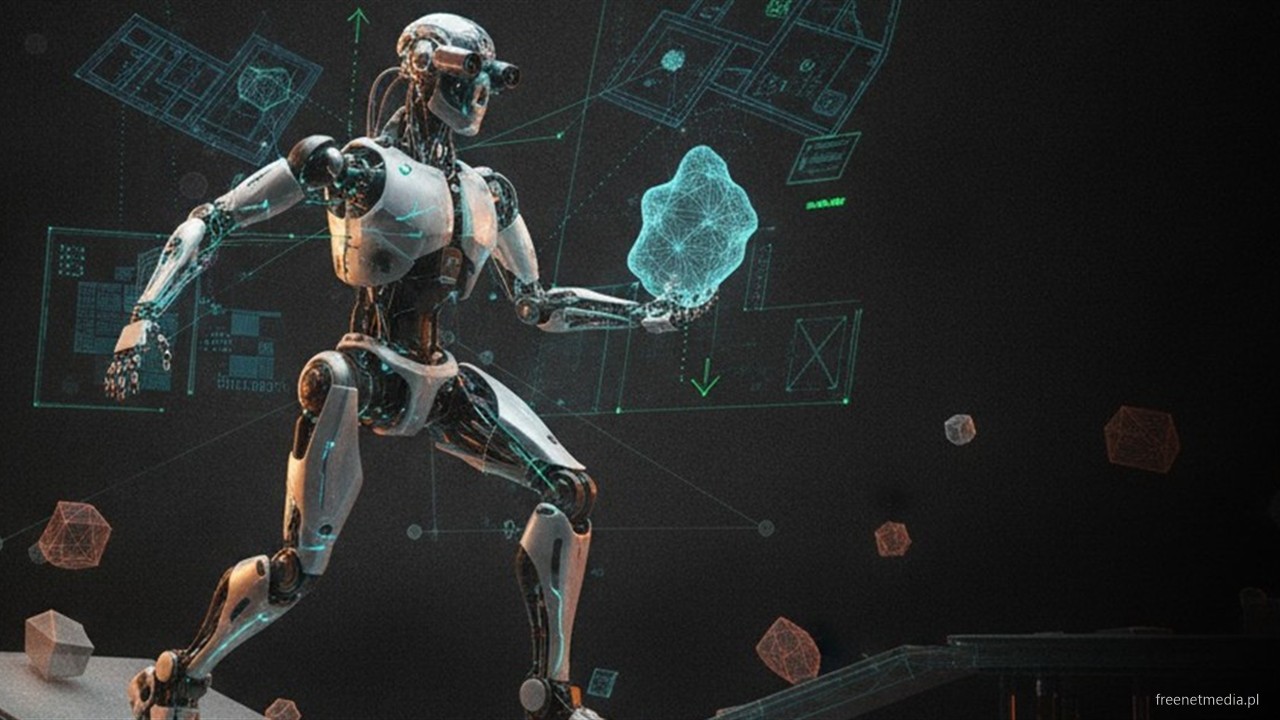
The dream of truly autonomous humanoid robots – machines capable of navigating complex, unstructured environments with grace and purpose, interacting with the world much like humans do – stands as one of the grand challenges in robotics. Achieving this vision requires not just sophisticated mechanical design but a profound synergy between how a robot perceives its surroundings and how it controls its own intricate body. At the heart of this challenge lie two pivotal technologies: Visual Simultaneous Localization and Mapping (V-SLAM) for perception, and Whole-Body Control (WBC) for motion.
Humanoid robots, by their very nature, are designed to operate in human-centric spaces. This means overcoming obstacles, climbing stairs, opening doors, and traversing uneven terrain – tasks that demand an exceptionally detailed understanding of their environment and the ability to execute complex, coordinated movements. Unlike wheeled robots that often rely on flat surfaces, humanoids must constantly battle gravity and maintain balance, making their navigation and control problems inherently more difficult.
Perceiving the World: The Role of V-SLAM
For a humanoid to move intelligently, it must first know where it is and what's around it. This is the domain of Simultaneous Localization and Mapping (SLAM), a fundamental problem in robotics. V-SLAM specifically leverages visual data, often combined with other sensor inputs, to build a map of an unknown environment while simultaneously estimating the robot's pose (position and orientation) within that map.
One of the most critical components of modern V-SLAM systems for dynamic robots like humanoids is Visual-Inertial Odometry (VIO). VIO systems fuse the rapid, high-frequency readings from inertial measurement units (IMUs) – specifically accelerometers and gyroscopes, sampling at 200–1000 Hz – with the slower, yet spatially rich, image frames captured by stereo cameras, typically at 30–60 Hz. This fusion is crucial. IMUs provide excellent short-term motion tracking, but they drift over time. Cameras, on the other hand, offer precise long-term positional corrections but can be susceptible to motion blur and featureless environments. By combining their strengths, VIO allows the robot to maintain a remarkably precise spatial orientation, even when subjected to the rapid, high-frequency torso vibrations inevitably caused by the robot's own steps and movements. This robust state estimation is the bedrock upon which stable navigation is built.
V-SLAM algorithms take this odometry information and integrate it with incoming sensor data to continuously refine both the robot's estimated position and the map of its environment. This map often takes the form of point clouds – millions of 3D data points representing surfaces and objects – or denser volumetric representations, allowing the robot to identify traversable paths, detect obstacles, and even understand the semantic nature of objects in its vicinity. The challenges for V-SLAM in humanoid applications are immense: dynamic lighting, moving objects (both humans and other robots), and the need for real-time performance in often unpredictable indoor and outdoor settings.
From Perception to Motion: The Control Hierarchy
Once a humanoid has a clear understanding of its environment through V-SLAM, the next challenge is to translate that perception into purposeful, stable, and efficient movement. This is where a sophisticated, multi-layered control architecture comes into play, breaking down complex behaviors into manageable, real-time computations.
1
The Trajectory Planning Layer: Commanding the Center of Mass
At a higher level of the control hierarchy, operating at a frequency of approximately 50–100 Hz, lies the Model Predictive Control (MPC) or Center of Mass (CoM) Trajectory Layer. This layer is responsible for the strategic planning of the robot's movement. It calculates the optimal trajectory for the robot's center of mass, which is a critical parameter for maintaining balance and stability in bipedal locomotion. Simultaneously, it predicts the ground contact forces required for subsequent steps, ensuring that the robot can exert the necessary pressure to propel itself forward, turn, or maintain its stance without falling.
This layer works by predicting the robot's future state over a short horizon and then optimizing a sequence of control inputs (like foot placement and CoM acceleration) to achieve a desired goal while satisfying dynamic constraints (e.g., maintaining balance, avoiding joint limits). The output of this layer is a sequence of desired CoM positions, velocities, and predicted foot forces, which then serve as high-level commands for the more granular control systems below.
2
The Whole-Body Control Layer: Orchestrating Actuators
Beneath the trajectory planning layer, and operating at a much higher frequency, is the Whole-Body Control (WBC) layer, typically running at an impressive 500–1000 Hz. This layer is the workhorse that bridges the gap between abstract motion plans and physical execution. Its primary function is to solve the complex system of rigid body dynamics equations in real-time. Given the desired movements from the higher-level trajectory planner and the current state of the robot, WBC determines the precise current settings (torques) that need to be applied to every single actuator in the robot's legs, spine, and arms.
Humanoids possess numerous degrees of freedom, and their stability and manipulability depend on the coordinated action of all these joints. WBC ensures that all parts of the robot move in harmony, maintaining balance, achieving desired end-effector poses (e.g., foot placement, hand position), and executing forces against the environment (e.g., pushing off the ground, grasping an object). It accounts for gravity, inertia, and contact forces, effectively translating desired movements into the low-level electrical signals that drive the robot's motors. This high update rate is essential to react swiftly to disturbances, maintain smooth motion, and ensure robust contact with the environment.
The Unseen Burden: Computational Power and Autonomy
While the functional breakdown of V-SLAM and WBC layers appears elegant, their real-world implementation faces a formidable challenge: computational power. The sheer complexity of these operations is staggering. Whole-Body Control working at 1000 Hz, the real-time reconstruction of point clouds from sensor data, and the use of sophisticated models (such as diffusion models for generating complex trajectories) all demand immense processing capabilities.
Crucially, humanoid robots are designed for untethered operation. They cannot drag a power cable from a server room behind them, nor can they rely on sending critical control loops to the cloud for processing. Network latencies, even in optimal conditions, would introduce unacceptable delays, leading to instability, falls, or even damage. This necessitates powerful, energy-efficient onboard computing hardware. The drive towards compact, high-performance processors and specialized AI accelerators at the edge is paramount for the continued advancement of humanoid robotics, allowing these intricate systems to perceive, plan, and act autonomously within their dynamic environments.
The Path Forward: Challenges and Future Directions
The integration of robust V-SLAM and agile Whole-Body Control represents a monumental leap in humanoid robotics. However, the journey is far from over. Future advancements will focus on enhancing the robustness of perception in extreme conditions, improving the adaptability of control to unexpected physical interactions, and further refining the energy efficiency of onboard computations. The development of more sophisticated learning algorithms, potentially drawing inspiration from human motor control and cognition, will allow humanoids to learn complex skills and adapt to novel situations with greater autonomy and intelligence.
The seamless synergy between understanding the world and moving within it is what defines true robotic autonomy. As V-SLAM and Whole-Body Control continue to evolve, they bring us ever closer to a future where humanoids are not just marvels of engineering but capable, indispensable partners in our world.
Opinia Groka
1
What is strong
The piece is exceptionally well-structured and flows logically from perception (V-SLAM/VIO) to planning (MPC/CoM) to execution (WBC). Technical concepts are explained with clarity and appropriate depth without becoming impenetrable, and the emphasis on real-time frequencies, onboard computation, and the necessity of tight sensor-to-actuator loops is both accurate and insightful. The writing maintains a consistent, professional tone throughout.
2
What is thin
Several claims rest on general assertions rather than concrete evidence. Phrases such as “remarkably precise spatial orientation” or “sophisticated learning algorithms” lack supporting detail or references to current performance numbers, failure modes, or published results. The description of point-cloud versus volumetric mapping also remains high-level and does not address memory or latency trade-offs that matter in practice.
3
What is missing -
Concrete robot examples (Atlas, Digit, Figure, etc.) and the specific V-SLAM/WBC stacks they actually run. - Explicit discussion of how V-SLAM uncertainty is propagated into the WBC optimization (covariance-aware control). - Treatment of contact-rich or dynamic interactions (pushing, catching, collaborative manipulation) where perception and control must co-adapt faster than the current layered hierarchy allows. - Any mention of sim-to-real transfer, domain randomization, or learning-based components that are increasingly used to close the loop.
4
Your take.
The article is a strong, readable overview that correctly identifies the core technical pillars and the onboard-compute bottleneck. It would move from “good survey” to “authoritative reference” with the addition of specific implementations, quantitative performance data, and a deeper treatment of uncertainty-aware integration between perception and whole-body control.
Opinia Claude
English Verdict on: Spatial Perception and Humanoid Navigation: V-SLAM and Whole-Body Control
1
Architectural Coherence
The article demonstrates excellent logical architecture, moving systematically from perception fundamentals through control hierarchies to computational constraints. The two-pillar framework (perception + control) provides an intuitive mental model for understanding humanoid autonomy. Transitions between sections are smooth, and the increasing specificity—from broad vision to granular actuator commands—mirrors the actual information flow in robotic systems.
2
Technical Precision and Depth
The frequency specifications (IMU at 200-1000 Hz, cameras at 30-60 Hz, MPC at 50-100 Hz, WBC at 500-1000 Hz) are accurate and grounded in real implementations. The explanation of VIO sensor fusion correctly identifies complementary failure modes—IMU drift versus camera feature loss. However, the treatment remains descriptive rather than analytical; absent are details about optimization formulations, constraint handling in WBC, or loop-closure mechanisms in SLAM.
3
Empirical Grounding
The piece makes sweeping claims about "remarkably precise" orientation tracking and "immense" computational demands without quantitative substantiation. What does "precise" mean—centimeter-level? Sub-degree angular accuracy? What percentage of onboard compute does WBC actually consume? Citing benchmarks from DARPA Robotics Challenge, published navigation accuracy metrics, or specific processor models would transform assertions into verifiable facts.
4
Coverage of Integration Challenges
While the article acknowledges that perception feeds control, it glosses over the critical interface between them. How are SLAM uncertainties represented—covariance matrices, particle clouds? Do they propagate into MPC cost functions? What happens when V-SLAM confidence drops in texture-poor environments—does the control layer switch to proprioceptive dead-reckoning? These integration questions represent the hardest unsolved problems in the field.
5
Omission of Contact Dynamics
The discussion of WBC focuses on tracking desired trajectories but neglects the contact-rich reality of bipedal locomotion. How are contact switches (heel-strike, toe-off) detected and incorporated into the dynamics model? What role does compliance control play when foot placement deviates from the planned location due to terrain irregularities? The article presents control as purely kinematic tracking when it's fundamentally a contact force regulation problem.
6
Absence of Learning Paradigms
Modern humanoid systems increasingly blend model-based control with learned components—neural network policies for terrain classification, learned disturbance observers, or end-to-end visuomotor policies trained in simulation. The article's "future directions" paragraph gestures vaguely at "learning algorithms" but doesn't address how reinforcement learning, imitation learning, or sim-to-real transfer are currently reshaping the field.
7
Computational Realism
The emphasis on onboard computation is well-placed and correctly identifies latency as prohibitive for cloud offloading. However, the discussion would benefit from specifics: Are researchers using x86 CPUs, ARM SoCs, FPGAs, or custom ASICs? How are compute budgets partitioned between perception, planning, and control? What optimizations (model quantization, sparse convolutions, approximate solvers) enable real-time performance?
8
Missing Failure Mode Analysis
Humanoid navigation fails frequently in research settings—V-SLAM loses tracking during rapid head motion, MPC generates infeasible footholds on slopes, actuators saturate during recovery steps. A balanced treatment would examine common failure modes, their root causes, and current mitigation strategies (relocalization, constraint softening, torque limiting). The article's optimistic tone suggests these technologies are more mature than reality permits.
9
Lack of Comparative Context
No mention is made of alternative approaches: direct visual servoing without explicit mapping, reactive control architectures that bypass planning layers, or event-based vision sensors that might offer bandwidth advantages over frame-based cameras. Positioning V-SLAM and WBC within the broader landscape of possible architectures would help readers understand when this particular combination is optimal versus when simpler or more exotic alternatives suffice.
10
Prose Quality
The writing is polished and engaging, successfully avoiding both excessive jargon and oversimplification. Metaphors like "workhorse" for WBC and "bedrock" for state estimation are apt without being patronizing. Sentence rhythm varies appropriately, and technical terms are introduced with sufficient context. The aspirational framing ("dream of truly autonomous humanoids") effectively motivates the technical content that follows.
11
Missing Stakeholder Perspectives
The article implicitly assumes a research audience but never clarifies who benefits from these advances or what specific applications justify the immense engineering investment. Would these systems enable disaster response, eldercare assistance, warehouse automation? Different use cases impose different requirements on robustness, speed, and energy efficiency that would shape design priorities.
12
Final Assessment
This is a competent, well-written introduction to the perception-control stack in humanoid robotics, suitable for graduate students or engineers transitioning from adjacent fields. It succeeds as a conceptual overview but falls short as a technical reference due to lack of quantitative detail, insufficient treatment of integration challenges, and minimal engagement with learning-based methods that increasingly dominate cutting-edge research. Strengthening empirical grounding and expanding coverage of failure modes would elevate it from survey to authoritative resource.
Opinia ChatGPT
1
Structure and
Clarity The review is remarkably well-organized, providing a clear progression from spatial perception through to motion control. Each section logically builds upon the previous one, ensuring that readers follow the narrative without confusion. The technical concepts are articulated with precision, striking a balance between technical depth and accessibility.
2
Technical
Detail While the review provides a solid intellectual overview, it occasionally falls short in substantiating claims. Statements promoting aspects such as "remarkably precise spatial orientation" and "sophisticated learning algorithms" would benefit from empirical evidence or references that ground these assertions in real-world scenarios. Moreover, certain discussions, particularly concerning point-cloud mapping versus volumetric mapping, could delve deeper into practical issues like memory capacity and latency.
3
Real-World
Examples The review would be strengthened by the introduction of specific humanoid robots such as Atlas or Digit, alongside their respective V-SLAM and WBC implementations. This would serve to contextualize the technologies discussed and provide tangible references for readers to understand how these concepts materialize in practice.
4
Uncertainty
Integration A significant gap lies in the discussion of V-SLAM uncertainty and its impact on the WBC optimization process. Addressing how uncertainty is managed within the control framework would enhance the discussion around real-time stability and robustness in dynamic environments.
5
Dynamic Interaction and
Adaptability The review does not adequately address the challenges posed by contact-rich interactions, such as pushing or collaborative manipulation, where real-time co-adaptation of perception and control is vital. Expanding on how current systems adjust to dynamic physical interactions would provide a fuller picture of the challenges faced by humanoid robots.
6
Learning-Based
Approaches There's a noticeable absence of mention regarding contemporary techniques such as sim-to-real transfer, domain randomization, or other learning-based methodologies that are relevant in today’s robotics landscape. Including these concepts could illustrate how researchers are bridging the gap between simulated environments and real-world applications.
7
Overall Assessment
Overall, the review is a commendable overview of the critical technological components in humanoid robotics. By integrating more specific examples, quantitative metrics, and a discussion of uncertainty management, it has the potential to elevate the work from a good survey to an authoritative and insightful reference in the field.