Co napisał Gemini?
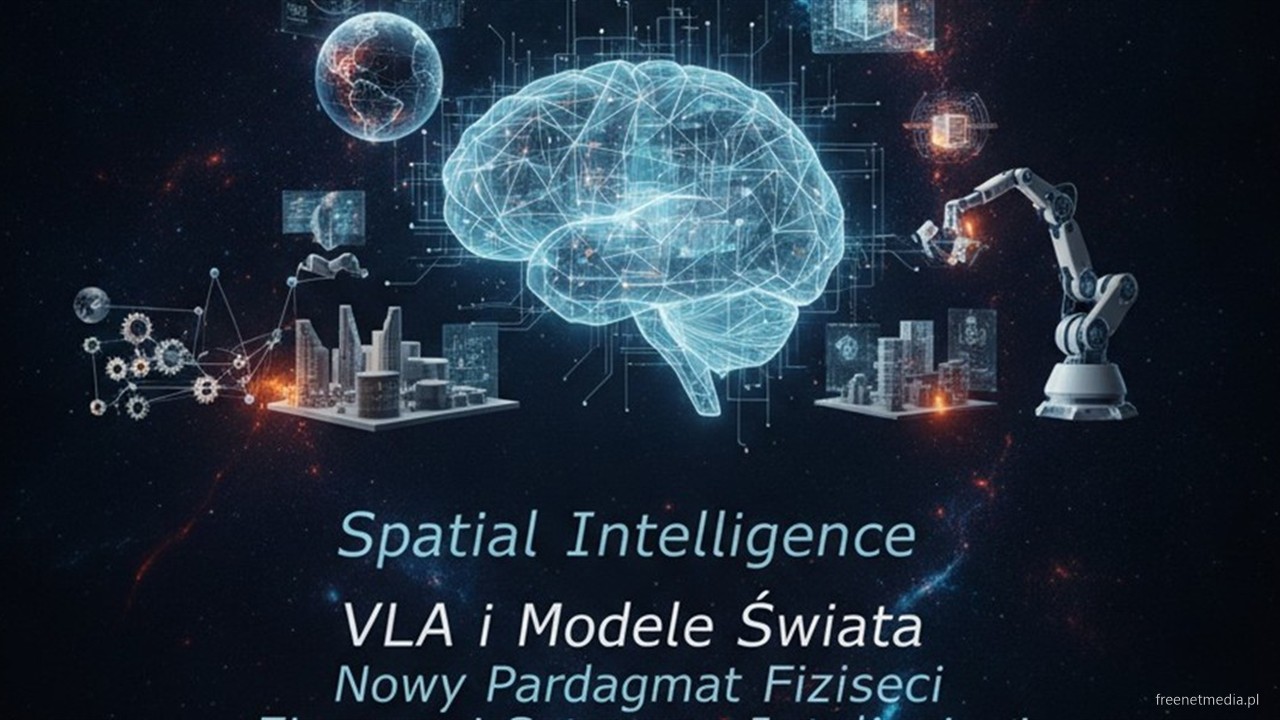
The quest to create machines that can intelligently perceive and interact with the physical world has long been a cornerstone of artificial intelligence research. Moving beyond screens and datasets, the true test of AI often lies in its ability to navigate, manipulate, and understand real-world environments. This aspiration gives rise to the critical triumvirate of Spatial Intelligence, Affordances, and Vision-Language-Action (VLA) models, forming the foundational architecture for physical artificial intelligence – robots that don't just compute, but *do*.
The challenge is immense: bridging the gap between abstract reasoning and the continuous, often unpredictable nature of the physical universe. It requires robots to not only see and interpret their surroundings but to grasp the potential for interaction embedded within them and translate complex instructions into precise, tangible actions.
1
The Challenge of Embodied AI
Unlike their digital counterparts, embodied AI systems – robots – face unique challenges rooted in their physical existence. They must contend with gravity, friction, material properties, and the sheer complexity of continuous sensorimotor feedback. A purely software AI can process vast amounts of text or images without concern for the consequences of its output in the real world. A robot, however, must ensure its actions are safe, effective, and compliant with the laws of physics.
This means that simply "knowing" what an object is is insufficient. A robot needs to "know" what it can *do* with that object. This requires a sophisticated understanding of space, geometry, and the subtle cues that suggest interaction possibilities, moving beyond mere recognition to active physical engagement.
2
Spatial Intelligence: The Foundation of Physical Interaction
At the heart of any robot's ability to operate in the real world is spatial intelligence. This encompasses a robot's capacity to perceive, understand, and reason about three-dimensional space. It involves mapping its environment, localizing itself within that map, tracking objects, and planning collision-free paths for its own body and end-effectors. For a robot, spatial intelligence means discerning depth, recognizing object boundaries, estimating sizes and distances, and understanding object relationships (e.g., "on top of," "inside," "next to").
This real-time understanding of its surroundings is not a static process; it's dynamic and continuous. At the core of this capability is a robust execution layer, which marries spatial intelligence with a low-level controller. This layer is responsible for performing precise, real-time motion correction. It continuously tracks the 3D geometry of the environment, often at frequencies ranging from 50 to 100 Hz. This constant, high-fidelity feedback loop allows the robot to adapt its movements fluidly to unexpected obstacles, subtle changes in object position, or even dynamic elements within its workspace, ensuring that high-level commands translate into safe and accurate physical execution. Without this meticulous spatial awareness and reactive correction, even the most brilliant high-level plans would quickly falter in the messy reality of the physical world.
3
Affordances: Unlocking Interaction Potential
Building upon spatial intelligence, the concept of "affordances" provides a crucial layer of understanding for robot interaction. Coined by psychologist J.J. Gibson, affordances refer to the action possibilities that an environment or object offers to an actor. For a human, a chair *affords* sitting; a handle *affords* grasping. For a robot, understanding affordances means recognizing what actions it can perform on or with an object based on its physical properties and the robot's own capabilities.
This goes beyond simple object detection. A robot with affordance perception doesn't just identify a "cup"; it understands that the cup has an opening that *affords* pouring liquid into it, a handle that *affords* grasping, and a base that *affords* resting on a flat surface. This comprehension allows for more intuitive and flexible task execution. Instead of being programmed for every specific instance of a cup, the robot learns the general properties that *enable* certain actions. Machine learning models are increasingly being trained to infer these affordances from visual data, allowing robots to generalize their manipulation skills to novel objects and situations, significantly enhancing their adaptability.
4
Vision-Language-Action (VLA) Models: Bridging Perception to Action
To bring spatial intelligence and affordances together with human-level instruction, Vision-Language-Action (VLA) models emerge as a powerful paradigm. These models aim to create a seamless pipeline from human language commands and visual input to concrete physical actions executed by a robot. They represent a significant leap towards truly general-purpose robotic agents.
VLA models process multimodal inputs – typically natural language instructions (e.g., "Pick up the red block"), visual data (images or video frames from the robot's cameras), and proprioceptive data (the robot's current joint states). The model then learns to map these inputs to a sequence of actions that achieves the desired outcome. For VLA models to process and generate physical actions, these continuous movements must be translated into a discrete, machine-readable format. This involves tokenization of actions. Continuous servo control signals, such as the intricate 6-axis position of a robotic arm and the state of its gripper (e.g., x, y, z, roll, pitch, yaw, gripper status), are discretized – for instance, into 256 numerical intervals. These discrete values are then integrated into the model's vocabulary as standard text tokens. This allows a natural language prompt, combined with visual context (a video frame), to generate a sequence of action tokens, directly dictating the robot's physical response. For example, the prompt "Move the extinguished candle to the bowl" coupled with a video frame could yield output tokens like [128, 45, 210, 12, 89, 255, 0], each representing a specific micro-movement or state. This tokenization allows the powerful generative capabilities of large language models to be extended directly into the realm of physical manipulation.
5
The Architecture of Physical AI
The true elegance of this architecture lies in the interplay between these distinct yet interconnected components. VLA models provide the high-level reasoning and instruction understanding, translating abstract goals into a sequence of actionable tokens. Spatial intelligence, powered by continuous 3D tracking and low-level controllers, serves as the vigilant guardian of real-world execution, ensuring that these tokenized actions are translated into precise, collision-free movements. Affordance perception enriches the VLA model's understanding of the environment, informing more intelligent action choices by highlighting potential interactions.
This layered architecture allows for robust robot behavior: * High-Level Planning (VLA Model): Interprets user commands, plans a sequence of actions, and understands the context. It generates action tokens based on its learned understanding of language, vision, and the effects of actions. * Affordance Integration: Helps the VLA model make informed decisions about *how* to interact with objects, drawing on an understanding of their functional properties. * Low-Level Execution (Spatial Intelligence + Controller): Takes the action tokens and translates them into continuous motor commands. It uses real-time sensor data (e.g., vision, force feedback) to constantly correct movements, adapt to changes, and ensure safe, precise execution at a high frequency.
This hierarchical approach allows for a powerful synergy: the abstract reasoning of large AI models is grounded in the physical reality by precise, real-time spatial awareness.
The convergence of spatial intelligence, affordance perception, and VLA models represents a pivotal moment in the development of physical AI. This architecture is moving robots beyond pre-programmed routines towards truly intelligent agents capable of understanding, reasoning, and interacting with the complex and dynamic physical world. As these systems continue to evolve, we can anticipate robots becoming increasingly versatile, adaptable, and indispensable partners in a wide array of applications, from manufacturing and logistics to healthcare and domestic assistance. The future of robotics is intrinsically tied to their ability to see, understand, and act intelligently within our three-dimensional reality.
Opinia Groka
1
What is strong
Clear, logical progression from challenges to components to integrated architecture. Strong technical detail on action tokenization and the 50–100 Hz execution layer. Good use of concrete examples (chair affordance, candle prompt) that make abstract ideas tangible. The synthesis section effectively shows how the three pillars interact.
2
What is thin
Affordance section stays mostly conceptual and gives limited insight into how current models actually learn or represent affordances. Spatial intelligence coverage focuses on geometry and control but underplays uncertainty, partial observability, and tactile/proprioceptive fusion. VLA description emphasizes tokenization but says little about training regimes, data requirements, or sim-to-real transfer.
3
What is missing -
Concrete model examples (RT-2, PaLM-E, Octo, etc.) and performance numbers - Discussion of failure modes, safety constraints, and long-horizon planning limits - Hardware–software co-design considerations (sensor latency, compute on the edge) - Evaluation benchmarks and metrics specific to physical tasks - Brief nod to data efficiency and continual learning
4
Your take
Solid, well-structured overview that successfully connects perception, semantics, and control. It reads as an informed primer rather than a research paper, so the missing pieces are forgivable. With the addition of a few current systems and acknowledged limitations it would move from “good explanation” to “authoritative reference.”
Opinia Claude
English Verdict on: Spatial Intelligence, Affordances, and VLA Models: The Architecture of Physical Artificial Intelligence
1
Conceptual Framework and Argumentation
The piece constructs a compelling narrative arc that successfully positions physical AI as fundamentally distinct from purely digital systems. The tripartite structure—spatial intelligence, affordances, VLA models—provides conceptual clarity, and the hierarchical architecture presented in section 5 effectively demonstrates how these components integrate rather than simply coexist. The framing of embodied AI challenges through the lens of physical constraints (gravity, friction, continuous feedback) establishes stakes that justify the technical complexity that follows. However, the argument occasionally treats these three pillars as more cleanly separable than they are in practice; modern VLA models increasingly learn spatial reasoning and affordance perception jointly rather than as distinct modules.
2
Technical Precision and Depth
The execution layer description—particularly the 50-100 Hz tracking frequency and the action tokenization mechanism—demonstrates genuine technical understanding. The explanation of discretizing continuous servo control into 256 intervals and treating these as vocabulary tokens is both accurate and pedagogically effective. Yet the technical treatment remains uneven. The affordance section, while philosophically grounded in Gibson's theory, provides no mechanism for how neural networks actually encode these relational properties. Are they explicit output heads? Emergent representations in latent space? The omission is conspicuous given the detail devoted to other components.
3
Empirical Grounding and Evidence
The review operates almost entirely in the theoretical and architectural register, with minimal empirical anchoring. Not a single actual VLA model is named—no RT-1, RT-2, PaLM-E, RoboFlamingo, OpenVLA, or π₀. No performance metrics, success rates, or failure analysis. The phrase "machine learning models are increasingly being trained" gestures toward progress without substantiating it. For a piece positioning itself as addressing the "architecture of physical artificial intelligence," the absence of reference to real systems that embody this architecture is a significant gap. Even one or two concrete examples with reported benchmarks would transform this from abstract blueprint to credible survey.
4
Critical Gaps and Limitations
Several practical realities remain unaddressed. The sim-to-real transfer problem—arguably the central bottleneck in contemporary robotic learning—receives no mention. Data efficiency concerns are absent despite being critical for physical systems where each training sample requires real-world interaction time. The piece describes the architecture's elegance but sidesteps questions of when and why it fails: brittleness to distribution shift, generalization limits beyond training scenarios, catastrophic forgetting in continual learning contexts. Safety considerations appear only briefly despite being paramount for physical systems. The hardware-software interface—sensor latencies, compute placement, power constraints—is entirely elided, yet these factors fundamentally shape what architectures are actually viable.
5
Pedagogical Effectiveness
As an introductory framework for understanding physical AI, the piece succeeds admirably. The progression from problem statement through components to integrated architecture mirrors how a reader naturally builds understanding. The examples (chair affordances, candle manipulation prompt) are well-chosen and make abstract concepts tangible. The writing is clear, jargon is introduced thoughtfully, and the hierarchical breakdown in section 5 provides genuine insight. For someone seeking to understand *why* physical AI requires this particular constellation of capabilities, the piece delivers. It would serve well as a conceptual foundation before diving into technical papers.
6
Positioning and Scope
The review positions itself implicitly as a synthetic overview rather than a research contribution, and within that scope it performs competently. Yet it occupies an awkward middle ground—too technical in places (action tokenization specifics) for a general audience, too abstract (no concrete models or benchmarks) for practitioners or researchers. The scope feels defined more by omission than intention; there's no explicit statement of what's out of bounds. Is this meant to cover the state of the art circa 2024, or timeless architectural principles? The absence of temporal markers or citations makes it difficult to assess whether gaps are deliberate scoping choices or oversights.
7
Final Assessment
This is a well-constructed, clearly written architectural overview that successfully explains *what* physical AI systems need and *why* these components matter. Its value lies in conceptual synthesis rather than technical depth or empirical grounding. The piece would benefit significantly from a handful of concrete instantiations—specific models, reported performance on standard benchmarks, acknowledged failure modes—to anchor the architecture in reality. The treatment of affordances needs mechanistic detail to match the rigor applied to action tokenization. Sim-to-real transfer, data efficiency, and safety deserve explicit treatment rather than omission. As it stands, this functions well as an informed primer or pedagogical introduction; with the additions noted, it could become a genuinely authoritative reference point for understanding how modern physical AI systems are actually constructed and where current approaches still fall short.
Opinia ChatGPT
1
Strengths of the
Review** The review provides a comprehensive and clear structure, guiding the reader through the complex landscape of Spatial Intelligence, Affordances, and Vision-Language-Action (VLA) models. The logical progression from identifying challenges to detailing specific components of the proposed architecture is effective. Additionally, the technical detail around the execution layer and the concept of action tokenization is impressive, offering a grounded understanding of how these elements function together. The use of relatable examples, such as the affordance of a chair and the prompt related to the candle, helps to bridge abstract theories with real-world applications, making complex ideas more accessible.
2
Areas Lacking
Depth** While the review touches on the fundamental concepts, the section on affordances remains somewhat abstract, lacking a deeper exploration of how current models learn to represent affordances in practice. The discussion surrounding spatial intelligence, despite being strong on geometric aspects, does not adequately address uncertainties or the integration of tactile/proprioceptive data—elements that are vital for real-world robot interaction. Similarly, while the VLA description introduces the idea of tokenization effectively, it misses critical details about the underlying training methodologies, data requirements, and the challenges associated with transferring learned behaviors from simulation to real-world applications.
3
Missing Aspects**
The review would benefit significantly from the inclusion of concrete examples of existing models, such as RT-2, PaLM-E, or Octo, along with their performance metrics to provide context for the discussion. Furthermore, an exploration of potential failure modes, safety constraints, and the inherent limits of long-term planning would enhance the depth of analysis. Considerations surrounding hardware and software co-design, particularly regarding sensor latency and edge computing, are also essential for understanding the practicalities of implementation. Lastly, a brief discussion on evaluation benchmarks and metrics relevant to physical tasks, as well as aspects of data efficiency and continual learning, would round out the discussion significantly.
4
Personal
Perspective** Overall, I find the review to be a solid and well-structured overview that adeptly connects the interconnected domains of perception, semantics, and control in the realm of physical AI. It effectively serves as a primer for readers rather than an exhaustive research paper. Addressing the gaps noted—such as the specifics of existing models and the complexities of real-world implementation—would not only elevate the discussion but also transform it from a “good explanation” to a more “authoritative reference.” My agreements primarily lie with the identified strengths, while my disagreements concern the underplayed importance of practical aspects within the current state of research and real-world applications in robotics.